Introduction
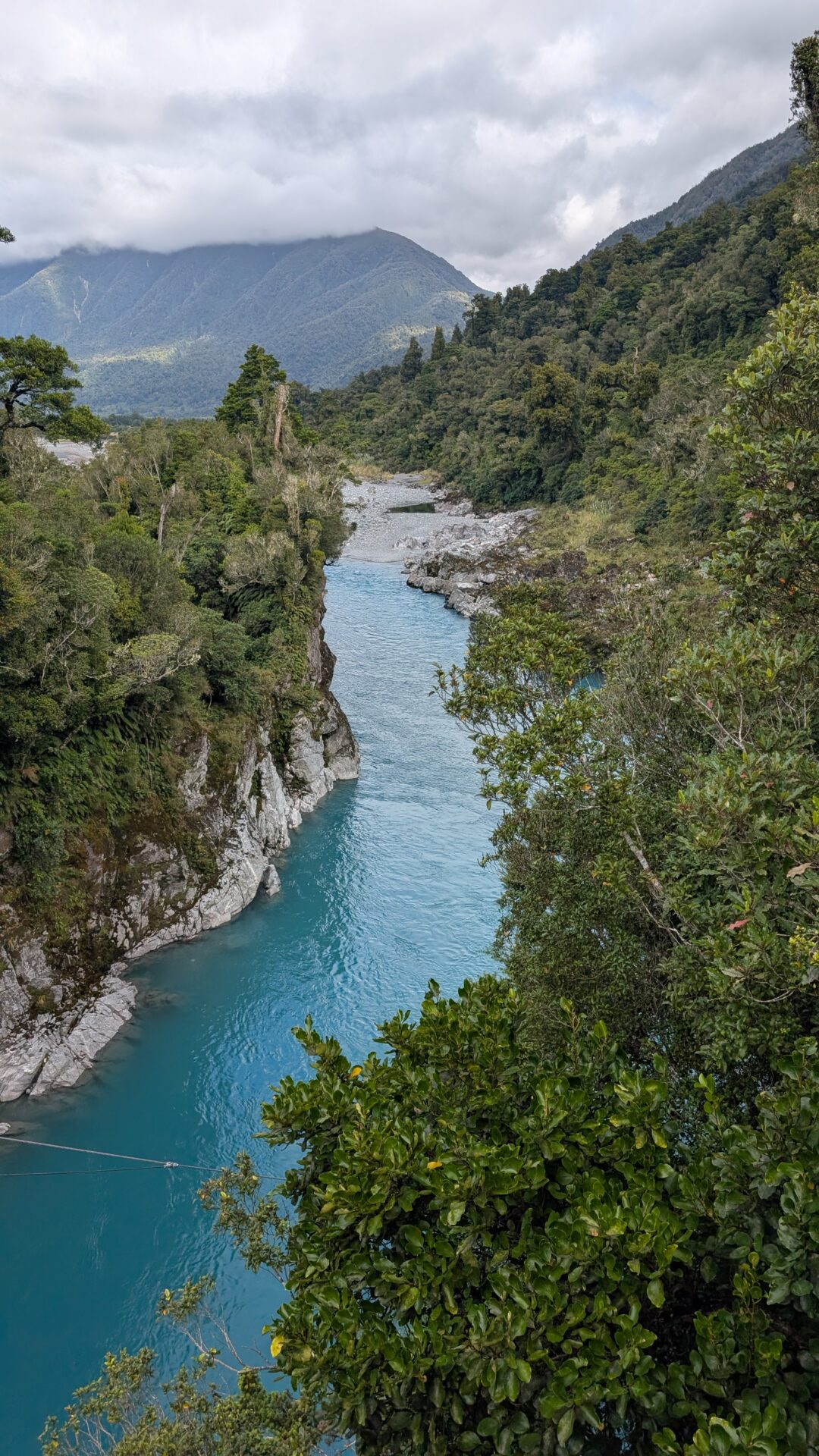
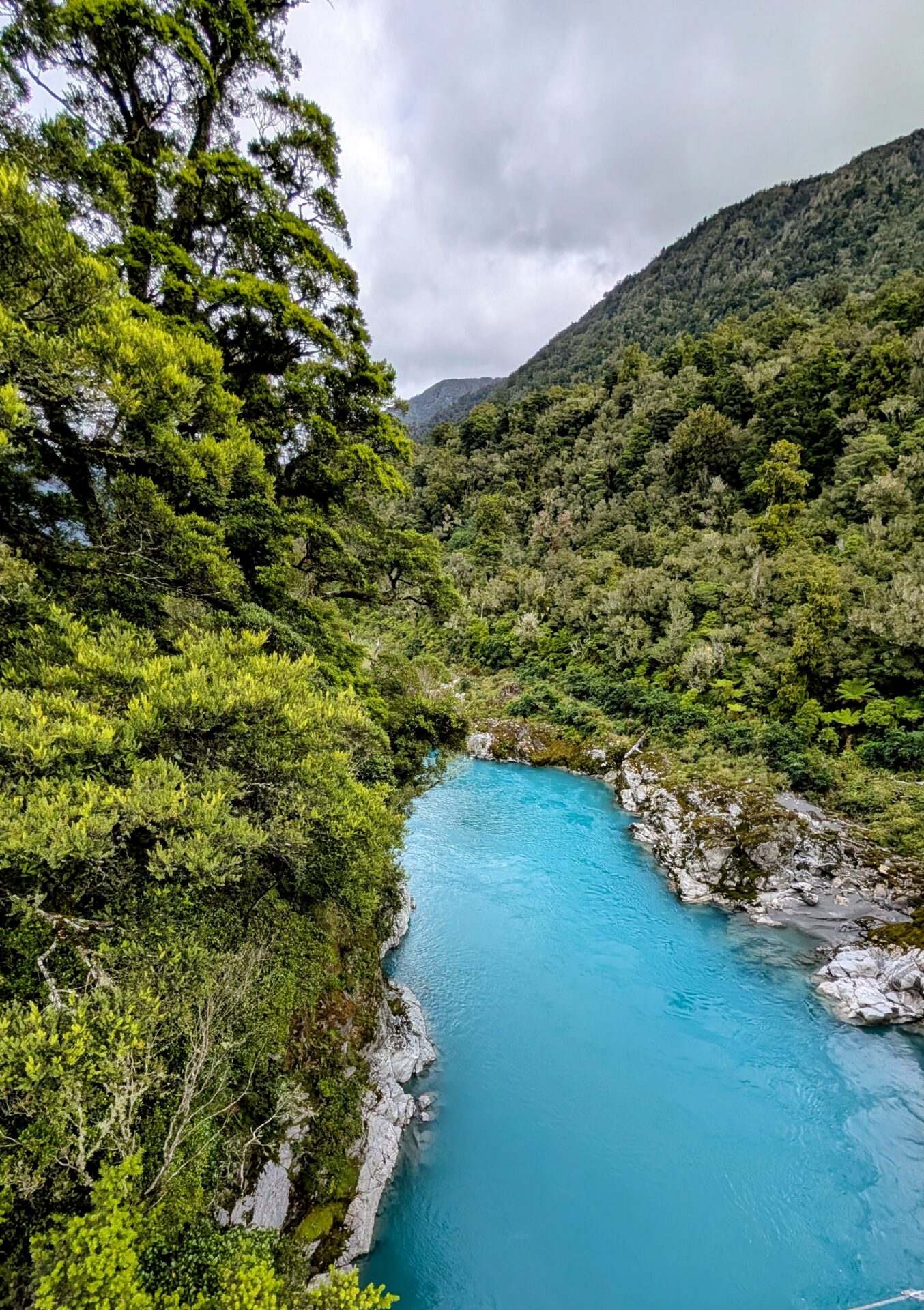
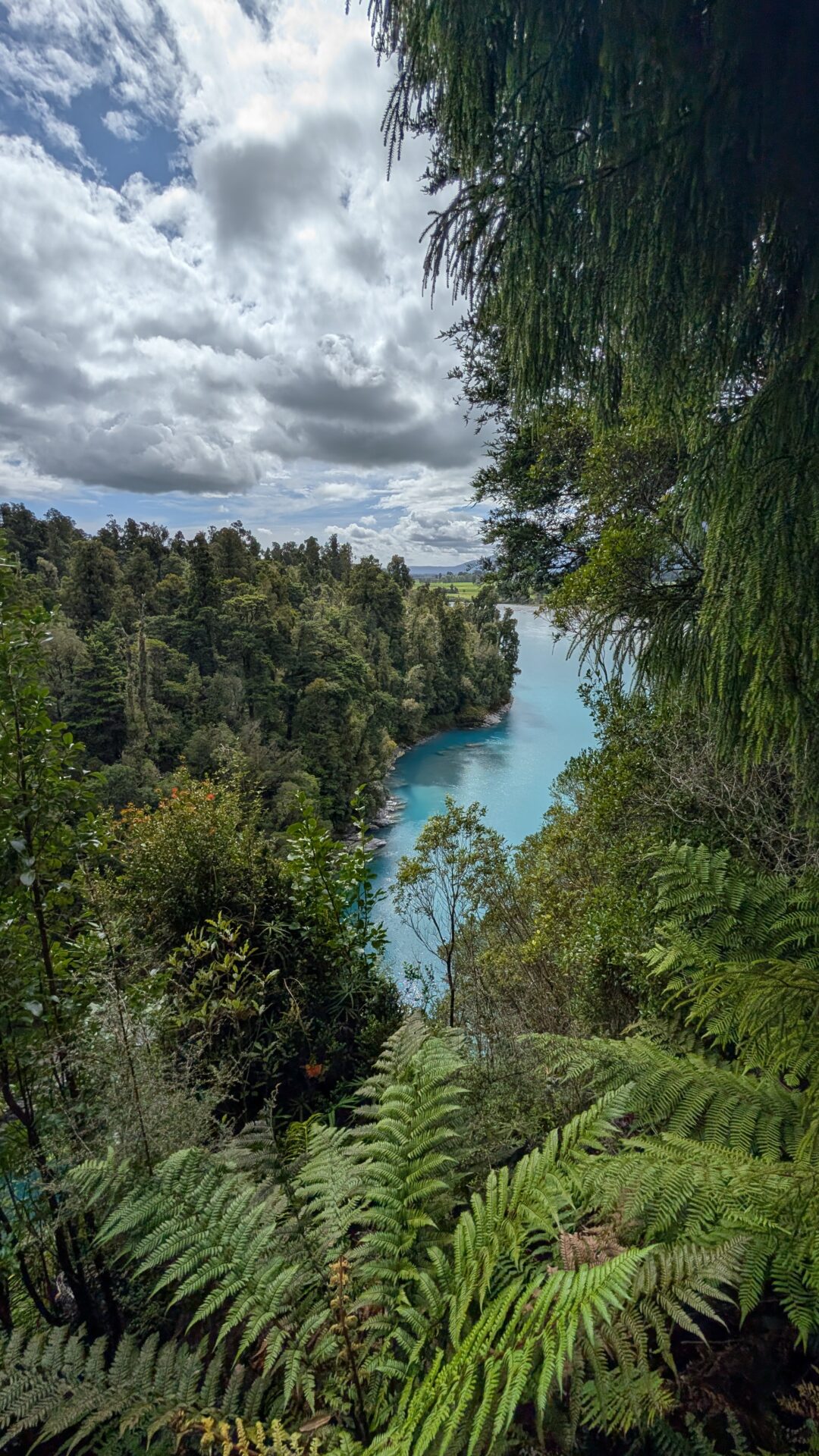
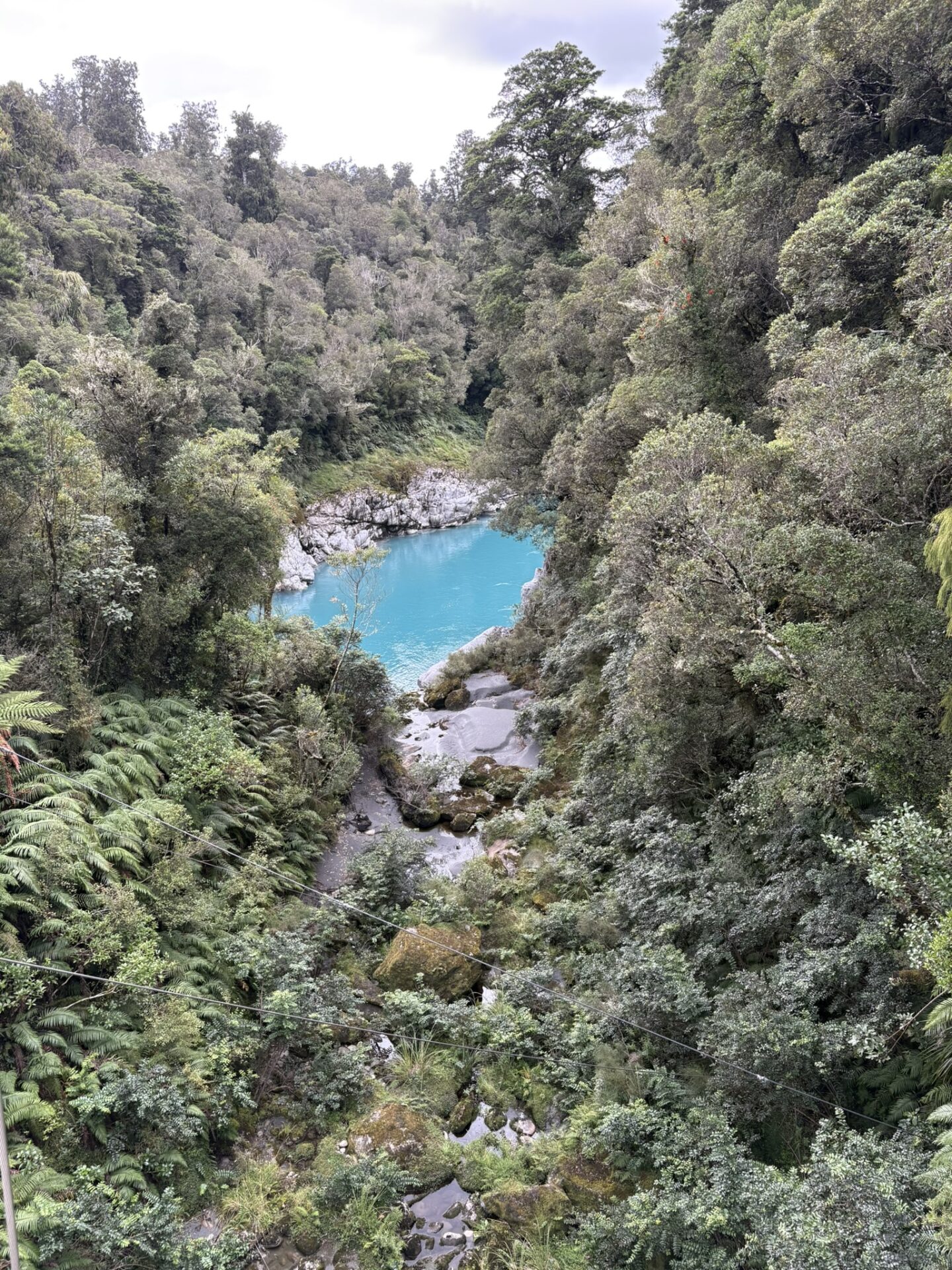
At some point during your first look at Hokitika Gorge, you will instinctively reach for your phone to check whether the camera’s colour settings are doing something unusual. They are not. The water is actually that colour. That specific, saturated, almost aggressively tropical shade of blue-green — in a steep schist gorge, in a temperate rainforest, on the grey and windswept West Coast of the South Island — is real, and it is produced entirely by nature, which apparently decided at some point that subtlety was overrated in this particular valley.
The colour comes from glacial rock flour: particles of suspended sediment ground fine by the Hokitika River’s upper glacial sources, which scatter light at the blue-green end of the spectrum and produce a hue that looks borrowed from somewhere considerably closer to the equator. It belongs here entirely. It is also, to be completely direct about it, one of the more visually arresting things you will encounter on a trip that is not short of visually arresting things.
The Hokitika Gorge walk is short, easy, and spectacular. It is the kind of place that earns its reputation without trying. And before you get there, you should stop at Hokitika Beach, stick your head through the driftwood letters, take the photograph, and carry on — because the West Coast has exactly two kinds of stops: the ones you planned and the ones you’ll thank yourself for making.
The Detour That Isn’t Optional: Hokitika Beach
Before you drive the 33km inland to the gorge, stop at Hokitika Beach. This will take twenty minutes and produce at least one photograph you’ll actually use.
The Hokitika Beach driftwood sign is one of those community-built landmarks that shouldn’t work as well as it does — the name spelled out in bleached, weathered driftwood branches, standing on a rock breakwater above the black sand, with the Tasman Sea rolling in behind it under whatever sky the West Coast has decided to provide. On an overcast day, the moody grey of the ocean and cloud against the pale driftwood is its own kind of beautiful. On a clear day, the contrast between the blue sea and the white-grey wood is postcard material. Either way, you want this photograph.
[Featured photo: Hokitika Beach — the driftwood sign spelling out HOKITIKA against the Tasman Sea, storm clouds building, waves running in behind. Classic West Coast.]
The beach itself is worth five minutes beyond the sign. Black iron-sand beaches are a West Coast signature, and Hokitika’s is broad and exposed, with the kind of raw, wind-scoured energy that reminds you the Tasman Sea goes all the way to Australia without interruption. There’s no shelter and no amenities on the beach itself — this is not a swimming beach, it’s a standing-and-looking beach — but it sets the tone for a day on the West Coast in a way that the main street of Hokitika township, charming as it is, does not.
Route Overview: Hokitika Gorge Walk
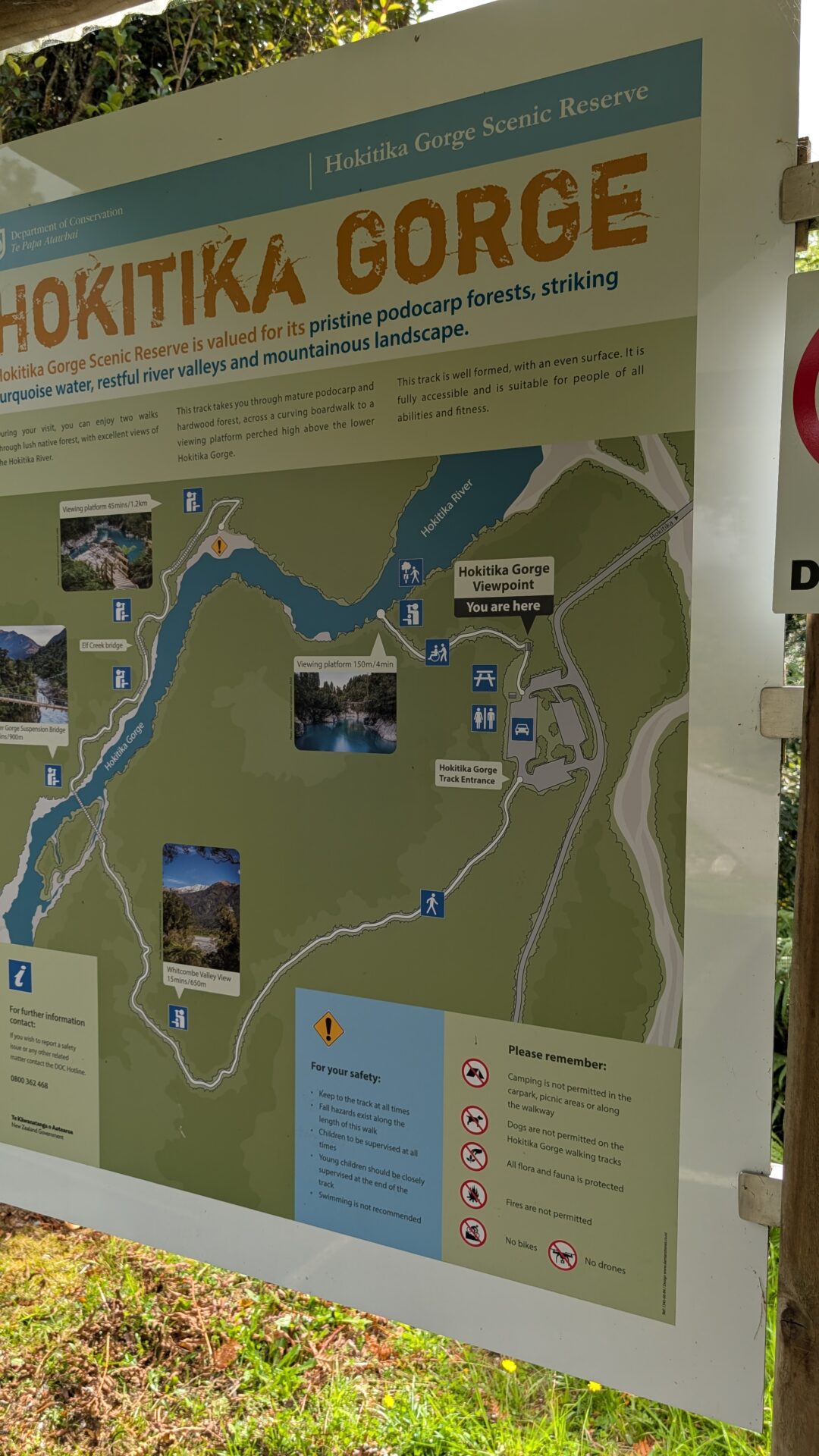
- Distance: Approximately 2km return to main swingbridge viewpoint; extended loop approximately 3–4km
- Elevation Gain: Minimal on the main track; some short climbs on the loop extension
- Difficulty: Easy (main track) to moderate (full loop)
- Track Type: Out-and-back to viewpoint, or loop via upper track
- Parking: Free car park at the gorge entrance, 33km from Hokitika township
- Facilities: Toilets at the car park
- Drive from Hokitika: Approximately 35 minutes on Hokitika Gorge Road — sealed for most of the route, some gravel sections
- Note: Check conditions before visiting. The gorge can flood after heavy rain and sections may close.
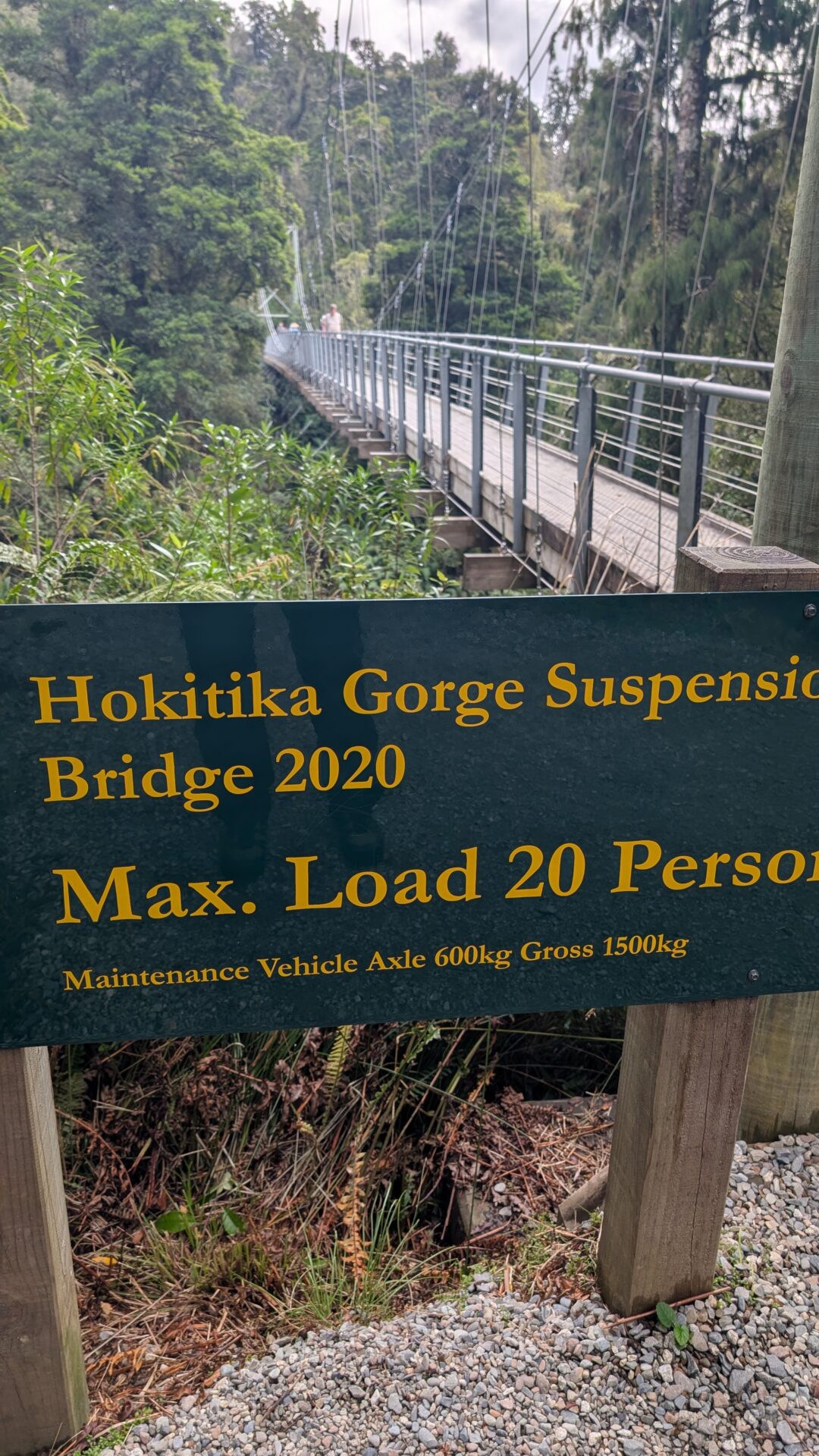
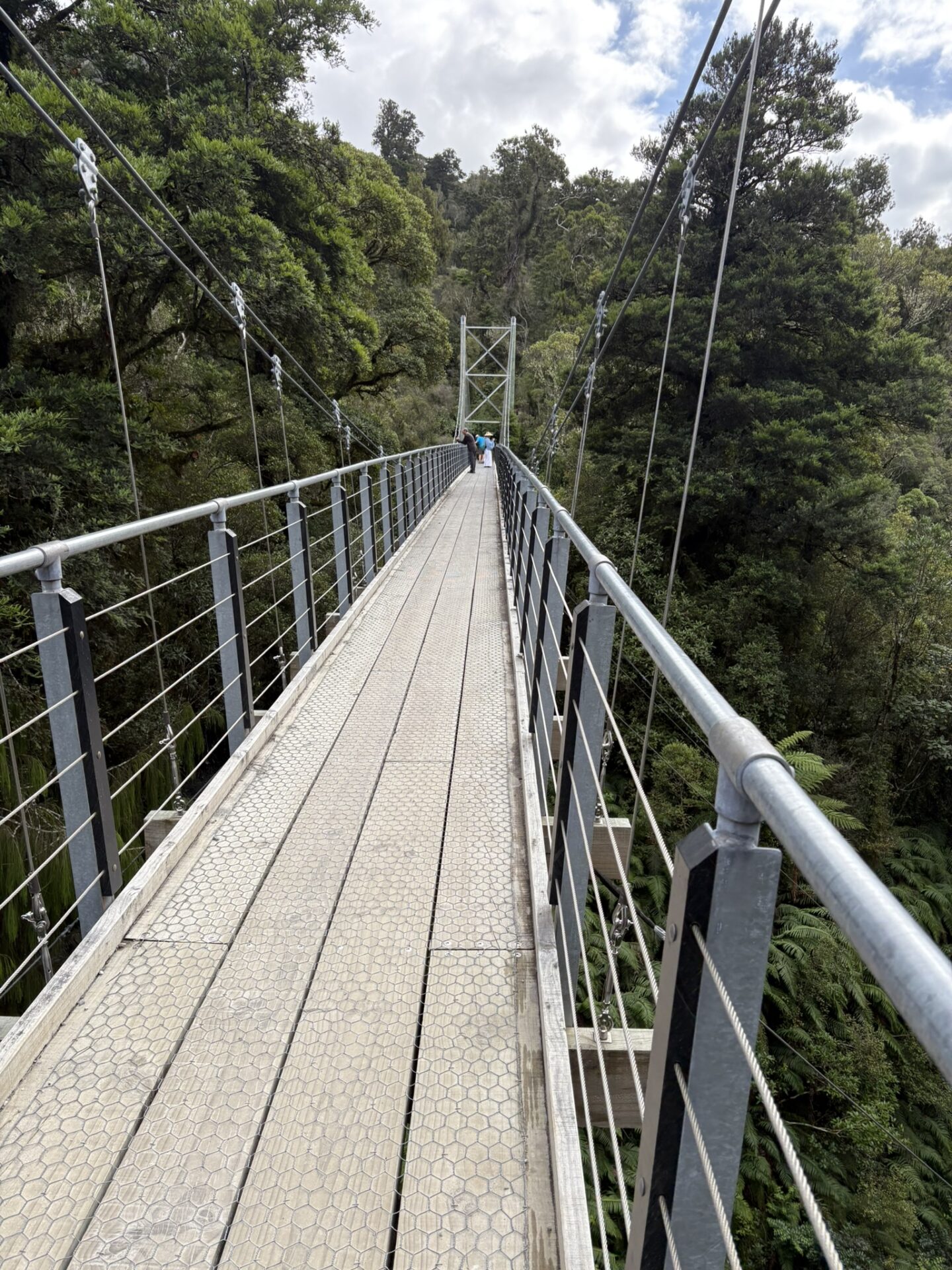
The Hokitika Gorge walk is not a demanding hike. It is a short, well-formed track through West Coast rainforest that deposits you at a series of viewpoints above one of the most extraordinarily coloured bodies of water in the country. The main attraction is the swingbridge, which crosses the gorge at a point where the turquoise water is compressed between vertical schist walls and the full effect of the colour hits you without warning. The suspension is both literal and metaphorical.
Trail Stages
Stage 1: Car Park to the First Viewpoints (Building the Anticipation)
The track from the car park enters West Coast rainforest immediately — the same moss-thick, density-maximising, ancient-feeling bush that characterises the whole of this coastline. The path is well-maintained and the gradient is gentle, which means your attention can be on the surroundings rather than your footing. Rimu, kāmahi, and tree ferns crowd the path on both sides. The sound of the river arrives before the view does.
The first glimpses of the gorge through the trees are calibration: you see the colour before you see the full scale, and the colour is so improbable that the brain briefly rejects it as a trick of the light. It is not a trick of the light. Keep walking.
Stage 2: The Swingbridge (The Reason You Came)
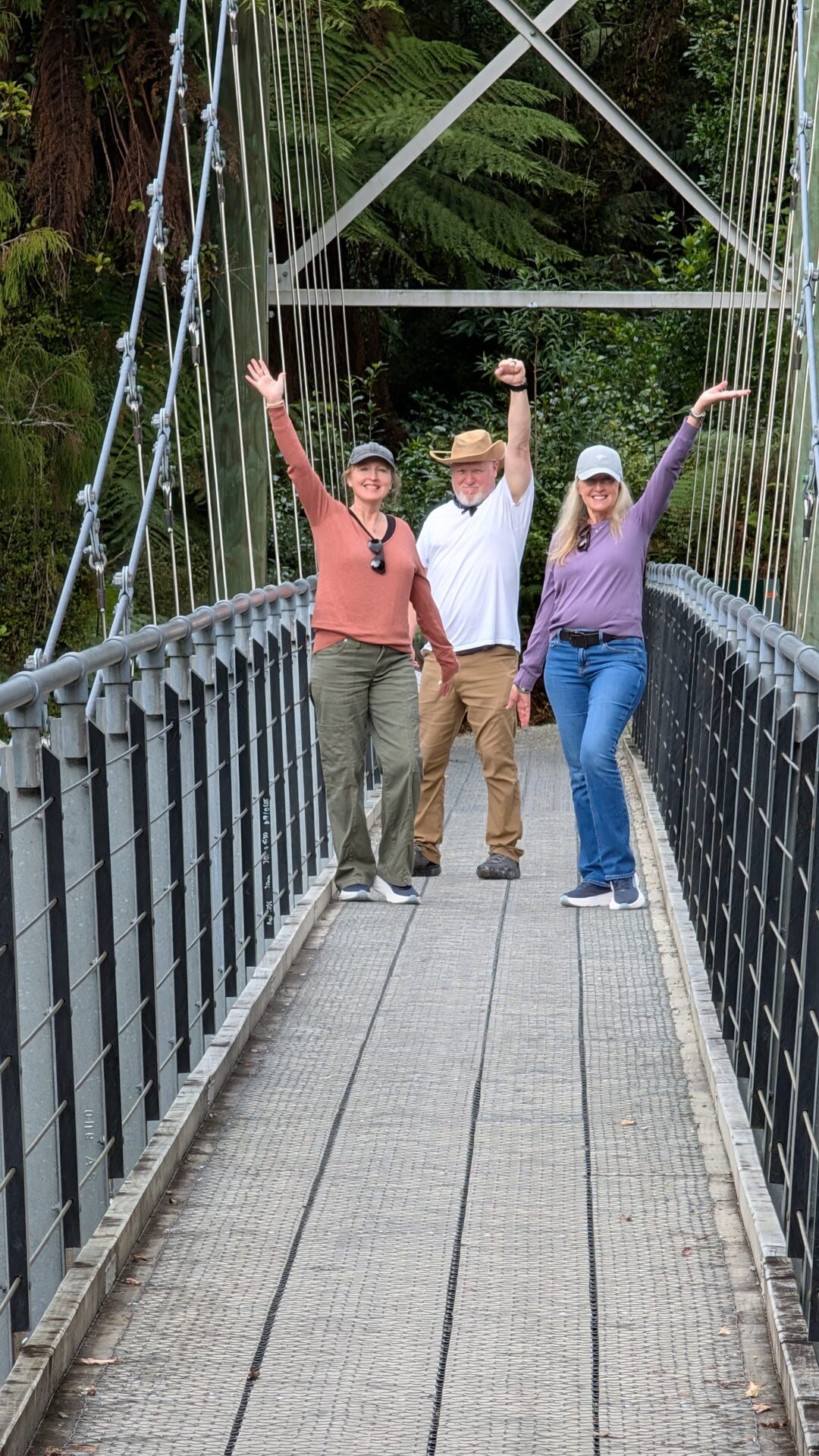
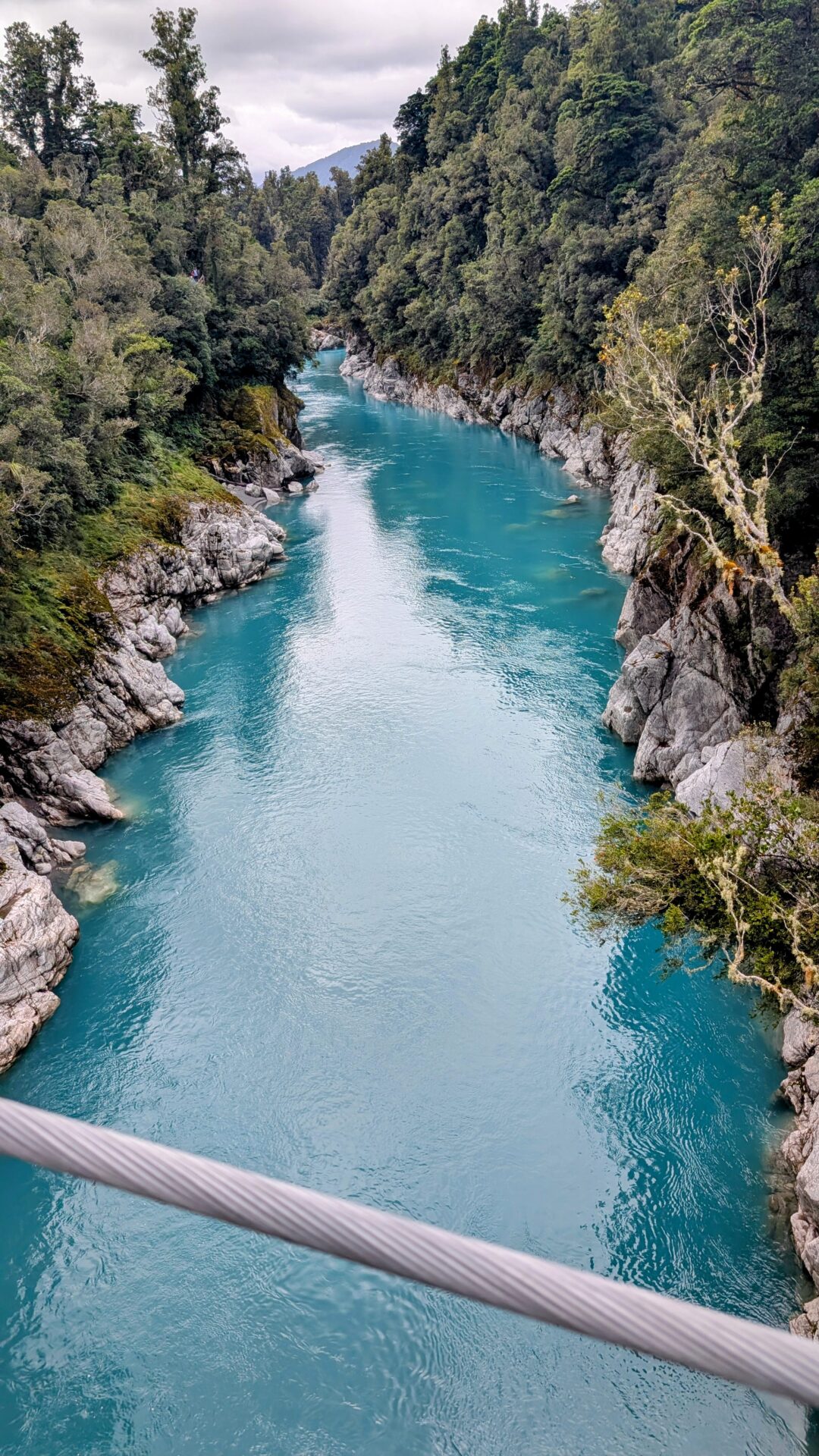
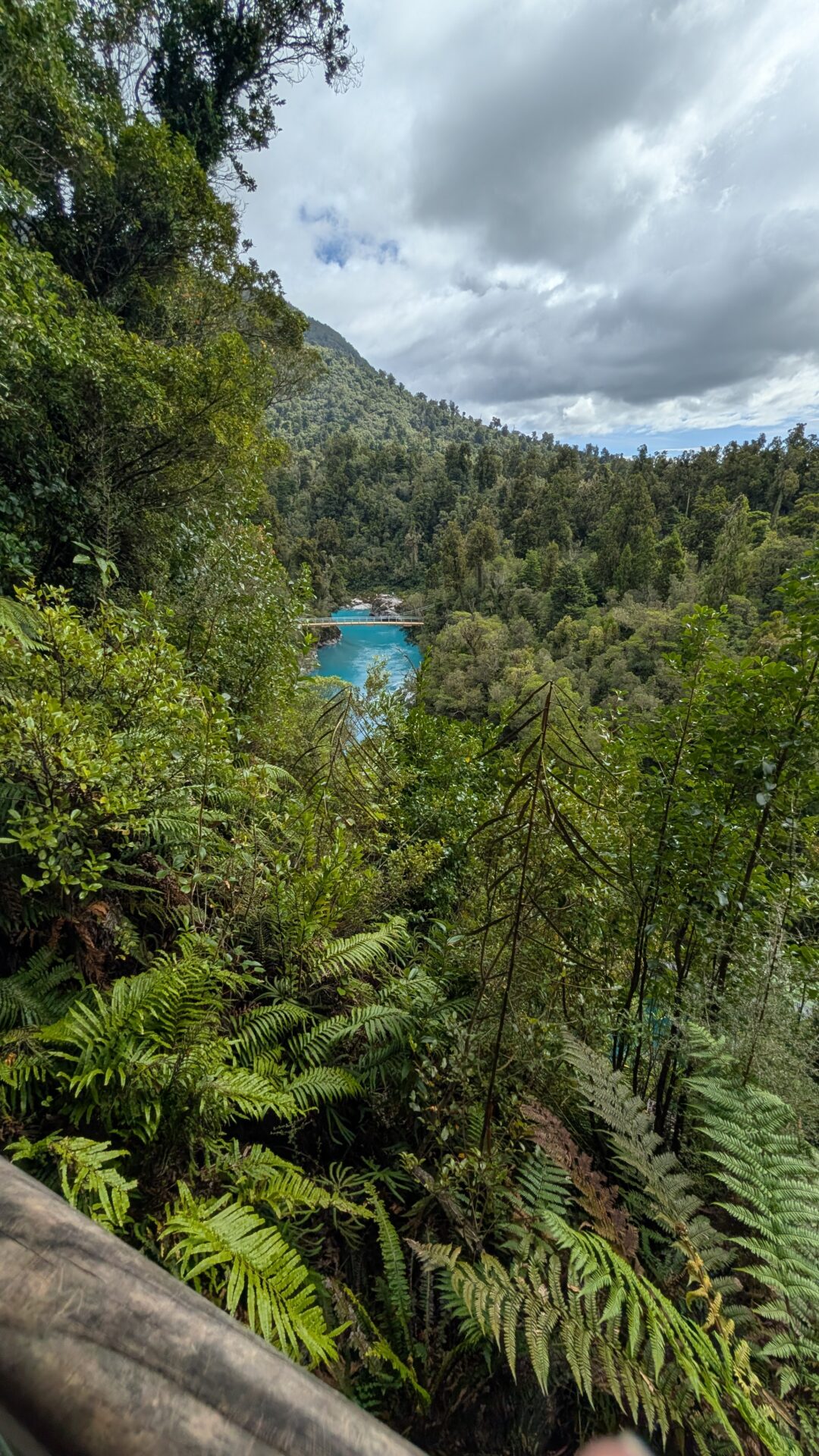
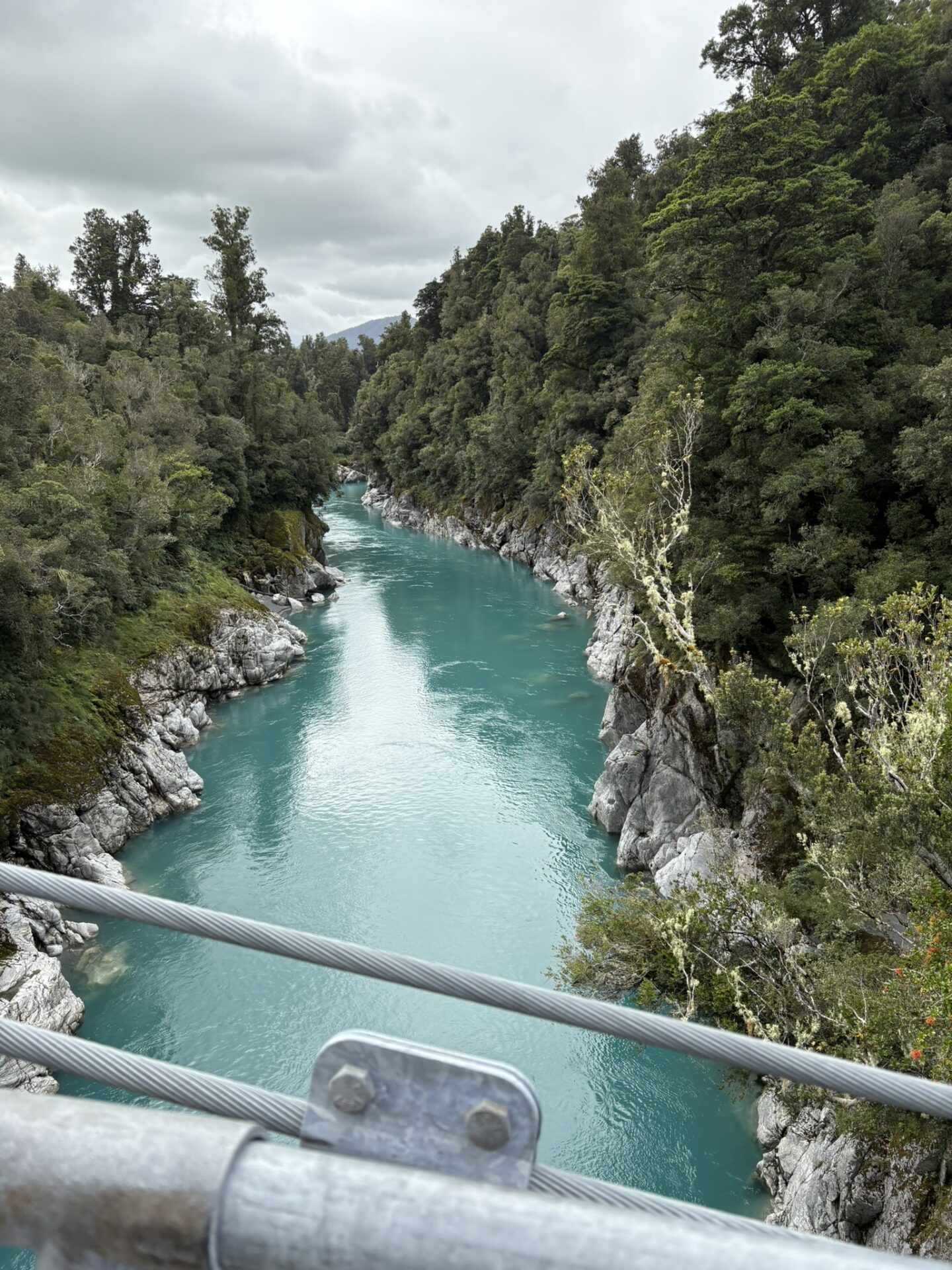
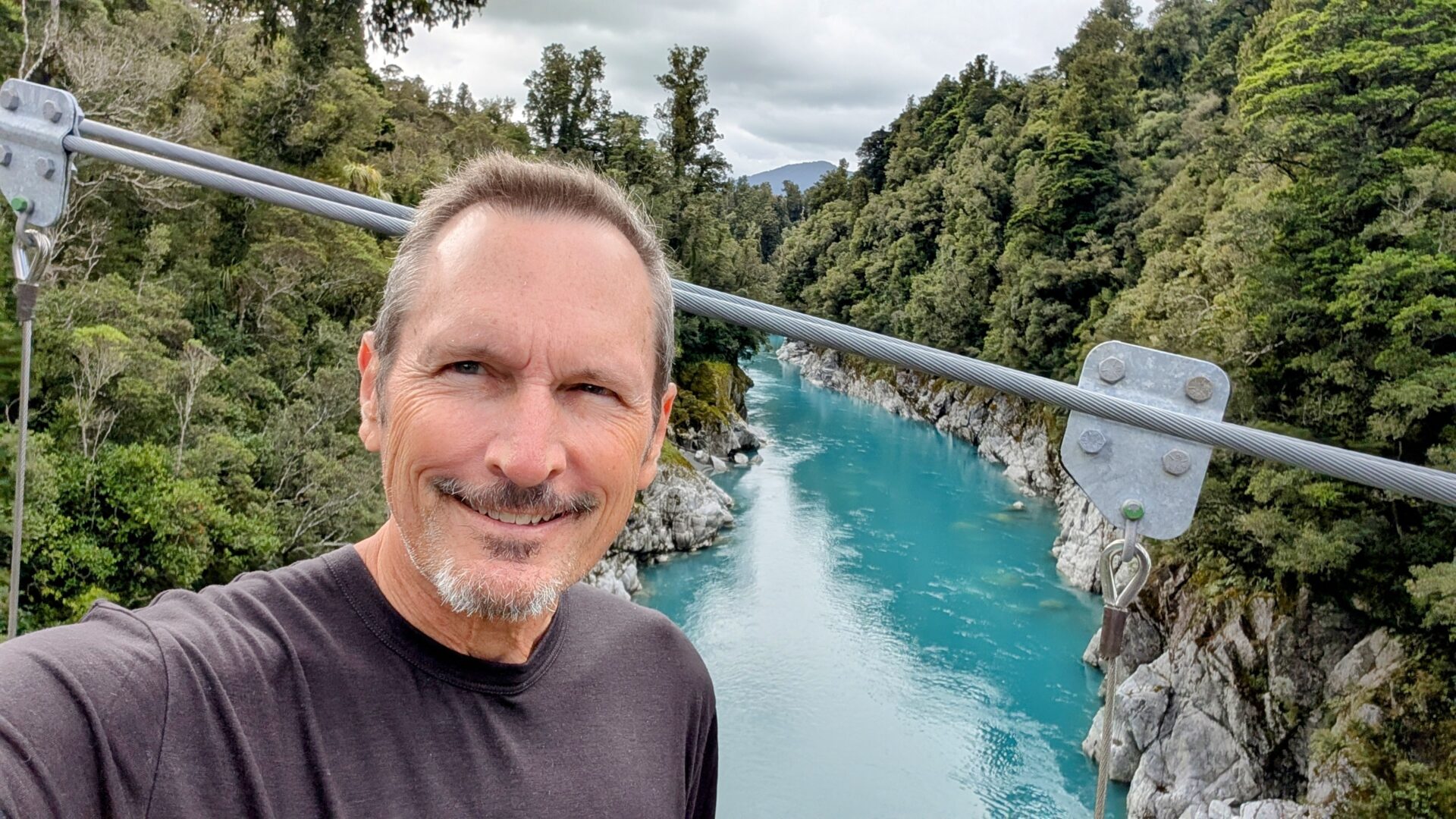
The swingbridge across the gorge is the main event. It spans the river at a point where the schist walls narrow and the water below is deep, fast, and that particular shade of turquoise that refuses to be described accurately in any combination of adjectives. Standing on the swingbridge and looking upstream — or downstream — is the photograph, the moment, and the memory, all at once.
[Featured photo: Hokitika Gorge from the swingbridge — the turquoise river cutting through vertical schist walls under a canopy of native forest, looking upstream toward the mountains. The colour is real.]
The bridge itself sways pleasantly underfoot, which adds a mild element of commitment to the experience. Those who prefer solid ground will find adequate viewing from the platforms on either side. Those who have no objection to a gentle oscillation will find the midpoint of the bridge offers the best downstream view and the most direct appreciation of just how far down the river is.
Spend time here. The colour changes with the light and with your angle to the water — deep aquamarine in shadow, bright cyan where the sun hits the surface, almost emerald in the shallows where the river curves. It does not look the same twice.
Stage 3: The Upper Loop (For Those Who Want More Forest)
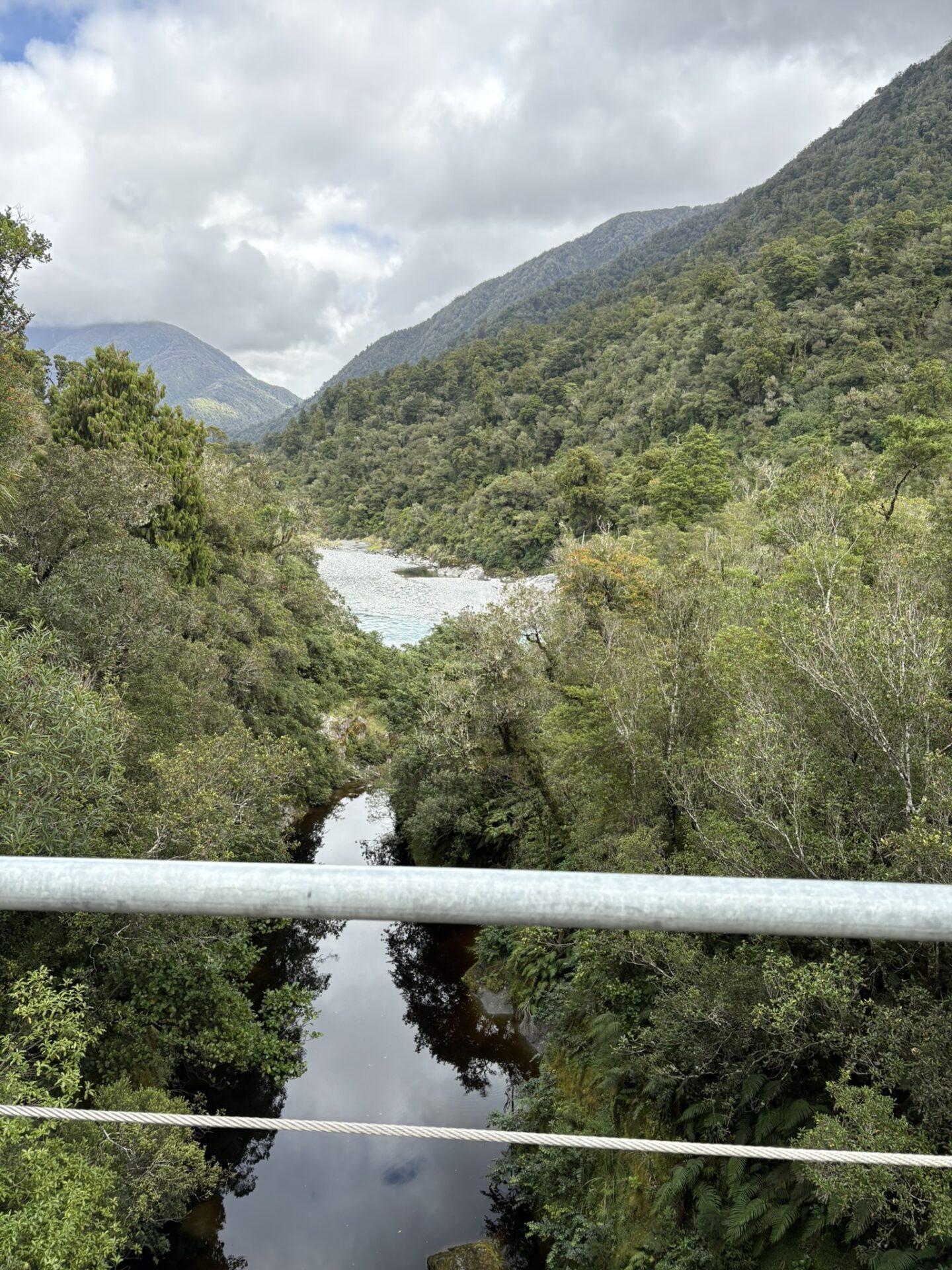
Beyond the swingbridge, a loop track extends up and around, returning via the upper bank with additional views over the gorge from higher vantage points. This section involves more climbing than the main track and some less-formed terrain, but it is still well within the capacity of any reasonably fit walker and it offers perspectives on the gorge that the lower track doesn’t.
The upper loop also passes through some of the denser, older sections of the surrounding forest — the kind of canopy that closes overhead and turns the light green and the whole world quieter. If you have the time and the inclination, it’s worth the extra twenty minutes. If the group vote goes against extended loops, the main out-and-back to the swingbridge is entirely satisfying on its own terms.
What to Pack
It’s a short, easy walk from a well-serviced car park — you don’t need expedition gear. But a few items earn their place:
- Sandfly repellent — this is the West Coast. The sandflies here are a feature of the landscape as much as the turquoise water. Apply at the car park. Apply again if you linger. There is no third option.
- Rain jacket — the West Coast receives extraordinary amounts of rainfall. A light waterproof takes up minimal space and makes the difference between a great day and a damp one.
- Camera with polarising filter — the gorge water photographs beautifully, but a polarising filter cuts surface glare and makes the turquoise colour render even more accurately. Worth knowing about before you arrive.
- Good footwear — the main track is well-formed but the upper loop can be muddy and uneven. Trail shoes or solid walking shoes are appropriate; sandals are not.
- Water — short walk, but bring some. The West Coast sun, when it appears, is real.
Combining Hokitika Beach and the Gorge: The Ideal Day
The best way to do both is to treat them as a morning double-header, leaving Hokitika township early:
- Hokitika Beach, 8–9am — the beach is best in morning light when the town is quiet and the Tasman is at its most atmospheric. Get the driftwood sign photograph. Walk to the water’s edge. Spend twenty minutes maximum and move on.
- Drive to Hokitika Gorge, arriving by 9:30–10am — the gorge is lit from above, the car park is manageable, and the swingbridge is yours before the midday rush. Complete the walk at whatever pace suits your group.
- Return to Hokitika for late breakfast or early lunch — the township has good café options and some of New Zealand’s better greenstone (pounamu) shops, which are worth a look if you have any interest in the stone that made this coast significant for Māori for centuries before European settlement.
The whole double works comfortably in a half-day. Both stops reward time rather than speed.
Seasonal Considerations
Summer (December–February): Peak season, best weather probability, most visitors. The gorge car park can fill quickly on fine weekends. Arrive before 10am. The turquoise colour is at its most vivid in direct summer sunlight.
Autumn (March–May): Thinner crowds and moody West Coast light that suits the gorge’s drama. The surrounding forest takes on warmer tones. Some of the best photography conditions of the year.
Winter (June–August): The West Coast in winter is a particular experience — frequent rain, low cloud, dramatic atmosphere. The gorge doesn’t lose its colour in rain, it just becomes more brooding. The beach in winter, under a storm sky, is properly elemental. Dress accordingly and don’t expect company.
Spring (September–November): Variable and vivid. Higher water levels from snowmelt can intensify the colour. Check road and track conditions, as the gorge road can be affected by slips after heavy rain.
Common Mistakes to Avoid
- Skipping the beach to save time. It’s 20 minutes. The driftwood sign photograph is one of the most recognisable images on the West Coast. Stop.
- Forgetting the gorge road conditions. It’s mostly sealed but not entirely. After heavy rain it can be affected. Check before driving out 33km.
- Arriving at midday in summer. The car park fills, the swingbridge queues, the light flattens. Morning is demonstrably better.
- Expecting a swimming experience. The water is glacially cold and the current is powerful in the gorge. The colour is for looking at, not for jumping into. The signs make this clear. So does common sense.
- Underestimating the sandflies. West Coast entry in every packing list. Universally applicable. Never optional.
- Rushing the swingbridge section. Stand on the bridge. Look in both directions. Let your eyes adjust to the colour. This is not a thing to walk past quickly.
FAQs
Is the Hokitika Gorge walk suitable for children? The main track to the swingbridge is entirely suitable for children and is a genuinely memorable experience for them — the colour and the bridge make it engaging at any age. The upper loop is less suited to very small children. Most families do the main out-and-back without any difficulty.
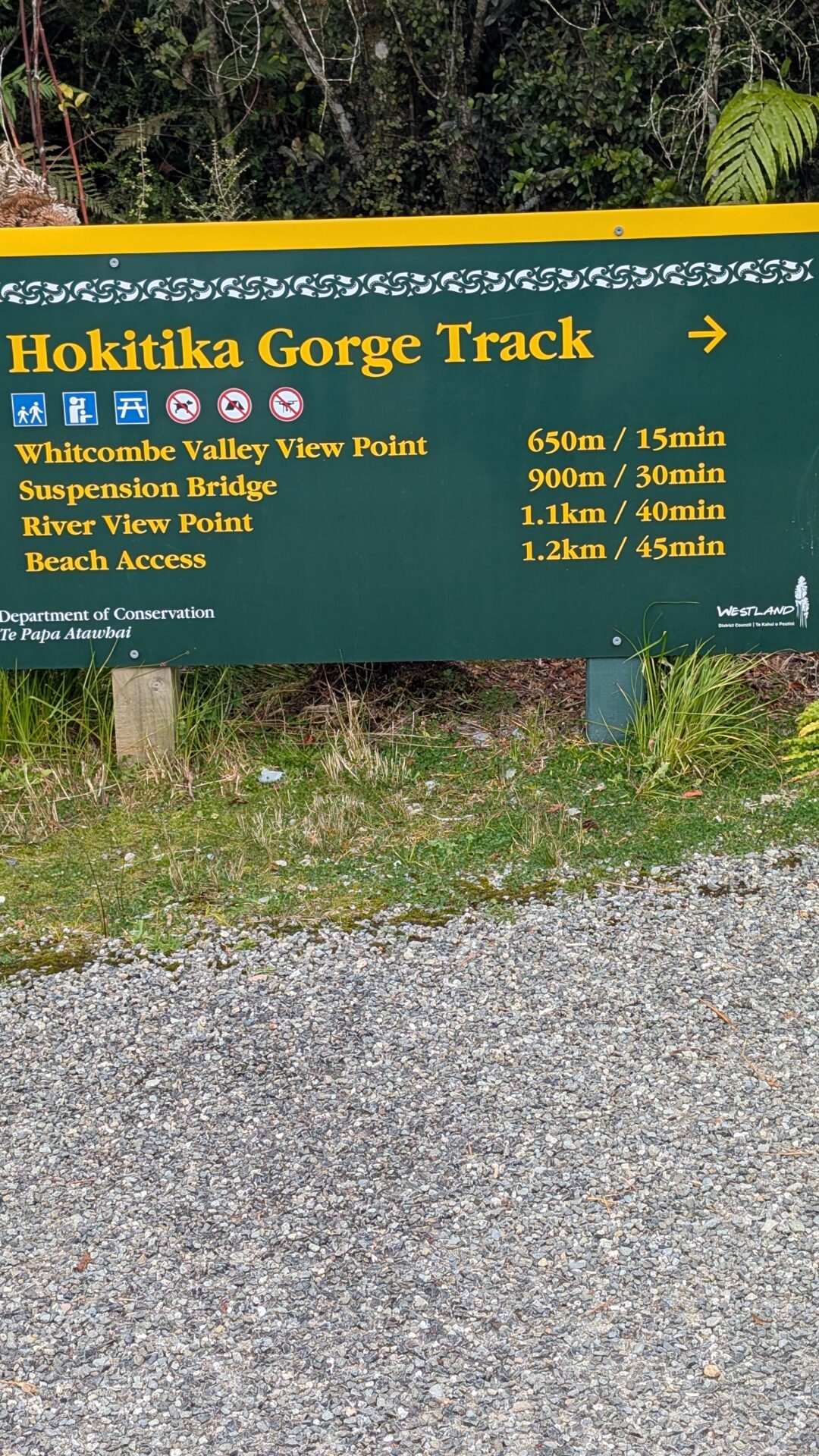
How long does the Hokitika Gorge walk take? Allow 1 to 1.5 hours for a comfortable return to the swingbridge with time to linger. Add 30–45 minutes if you’re doing the full upper loop.
Why is the water that colour? Glacial rock flour — ultra-fine sediment particles suspended in the water from the glacier-fed upper Hokitika River. These particles scatter light at the blue-green end of the spectrum, producing the turquoise colour. It is entirely natural and not, despite what your eyes will initially suggest, the result of any kind of human intervention.
Is the driftwood sign at Hokitika Beach permanent? The sign is rebuilt and maintained by the community and has been a feature of the beach for many years, but individual letters are occasionally damaged by storms or high tides. Its current configuration may differ slightly from photographs you’ve seen. It is, however, consistently there in some form, and consistently worth photographing.
Can you swim at Hokitika Gorge? No. The current is strong, the water is cold, and the gorge walls offer no safe exit. Swimming is not permitted and is genuinely dangerous. The colour is for viewing.
Is the drive to Hokitika Gorge worth it? Unambiguously yes. Thirty-five minutes from Hokitika township for one of the most visually extraordinary short walks on the West Coast is a straightforward calculation.
Conclusion: Two Stops, One Unforgettable Morning
Hokitika doesn’t announce itself. It’s not Queenstown — it won’t bungee-jump you into enthusiasm or sell you an adventure package. It’s a small West Coast town with a beautiful beach, an extraordinary gorge half an hour inland, and the particular self-possession of a place that knows what it has and doesn’t need to shout about it.
The driftwood sign on the beach is homemade and impermanent and quietly perfect. The gorge water is that colour because ancient ice ground ancient rock to fine powder and the river carried it here, and the light does the rest. Neither of these things required anyone’s approval to be extraordinary.
Stop at the beach. Read the letters. Walk to the water. Then drive inland, cross the swingbridge, and stand over that turquoise river for as long as you can justify.
Some mornings on the West Coast feel like they were arranged specifically for you. This is one of them.
Related hikes: Pancake Rocks and Lake Matheson.
No AllTrails data for this walk — the gorge is too short to need a GPS track and too good to spend time looking at your phone. Conditions at time of visit: overcast at the beach, dramatic at the gorge. Turquoise verification: confirmed. Sandfly management: ongoing.