Introduction
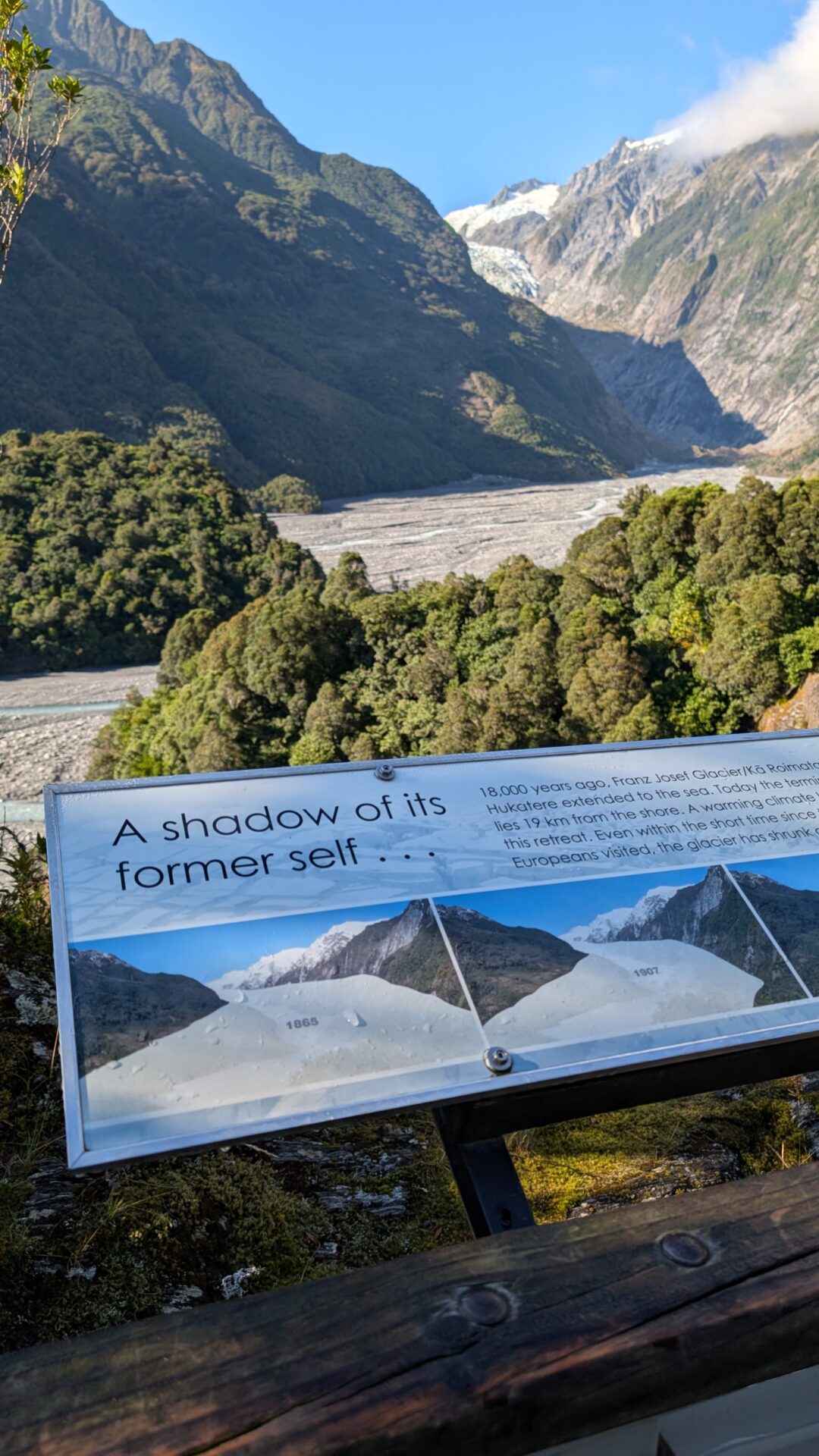
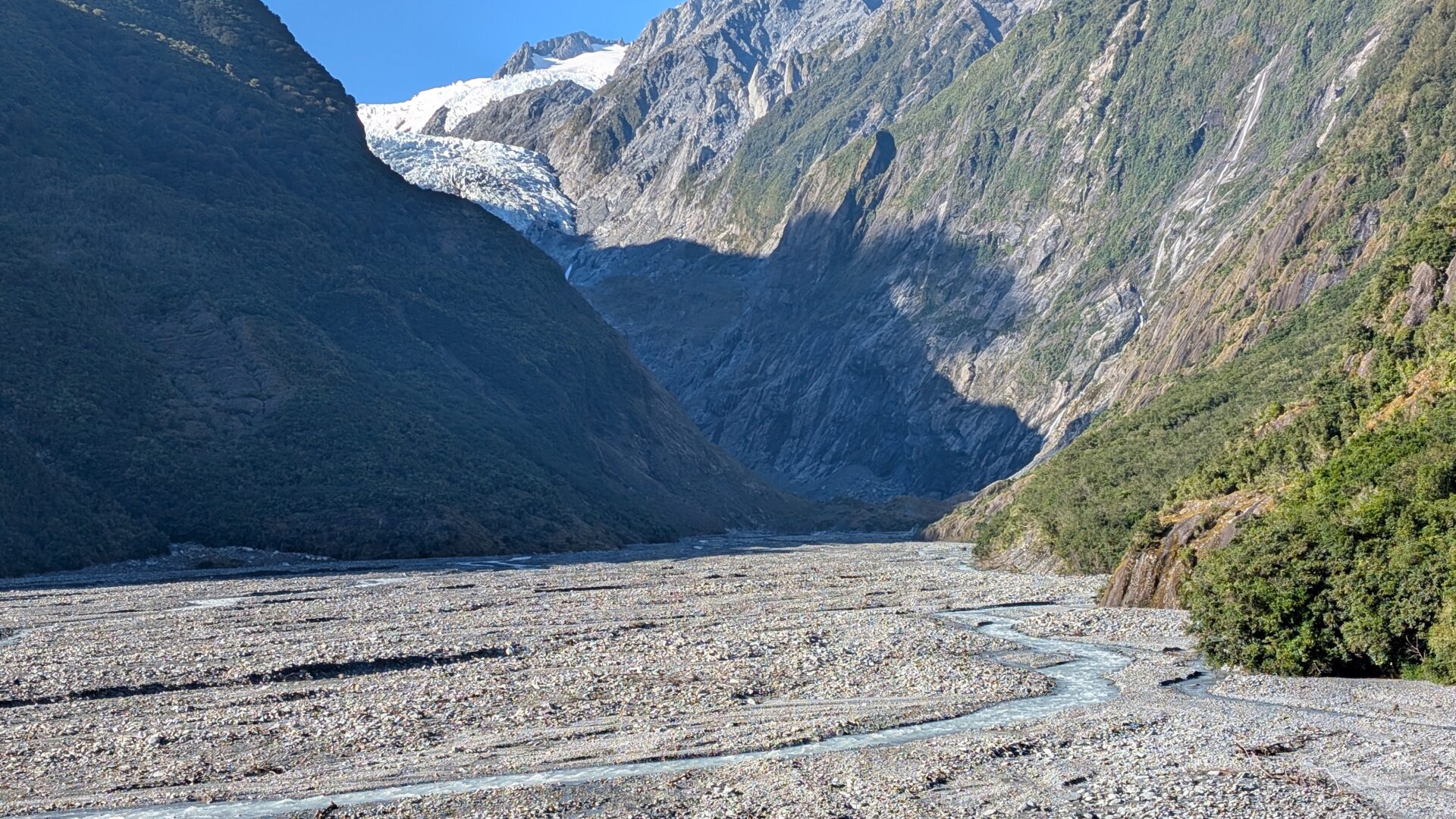
There’s an interpretive sign at the Franz Josef Glacier lookout that politely, clearly, and with considerable scientific restraint, explains that future generations will likely have to walk farther up the valley to see the glacier at all. It sits in the foreground of one of the more dramatic views on the West Coast — the glacier tongue visible high in the valley, the braided Waiho River below, the Southern Alps rising on either side — and it asks you to hold two things simultaneously: how magnificent this is right now, and how much of it has already gone.
I stood there for quite a while.
Franz Josef Glacier/Kā Roimata o Hine Hukatere is retreating. It has retreated dramatically over the past century and continues to do so. This is not a comfortable fact, but it is the context in which every visit to this valley now takes place. The walk from the car park to the glacier lookout is easy — genuinely, accessibly easy, wide enough to push a pram, flat enough to manage in most footwear — and the landscape it moves through is so extravagantly beautiful that the emotional weight of what the interpretive signs are telling you lands harder for it. This place is spectacular. And it is changing.
That said: go. Go now. Because what’s here right now is extraordinary.
Route Overview
- Start/Finish: Franz Josef Glacier Car Park, Cron Street, Franz Josef township
- Distance: Approximately 2.5–3 km return (car park to main lookout)
- Elevation Gain: Minimal — this is genuinely flat, wide valley walking
- Track Type: Out-and-back
- Difficulty: Easy — wide, well-formed path suitable for most fitness levels and footwear
- Parking: Pay and display at the main car park; busy in peak season, arrive early
- Highlights: Peter’s Pool mirror reflection, glacier valley viewpoints, main lookout with interpretive panels
- Note: The trail is managed by DOC and conditions can change. The lower valley can close after heavy rain due to flood risk from glacial melt. Always check DOC’s website before visiting.
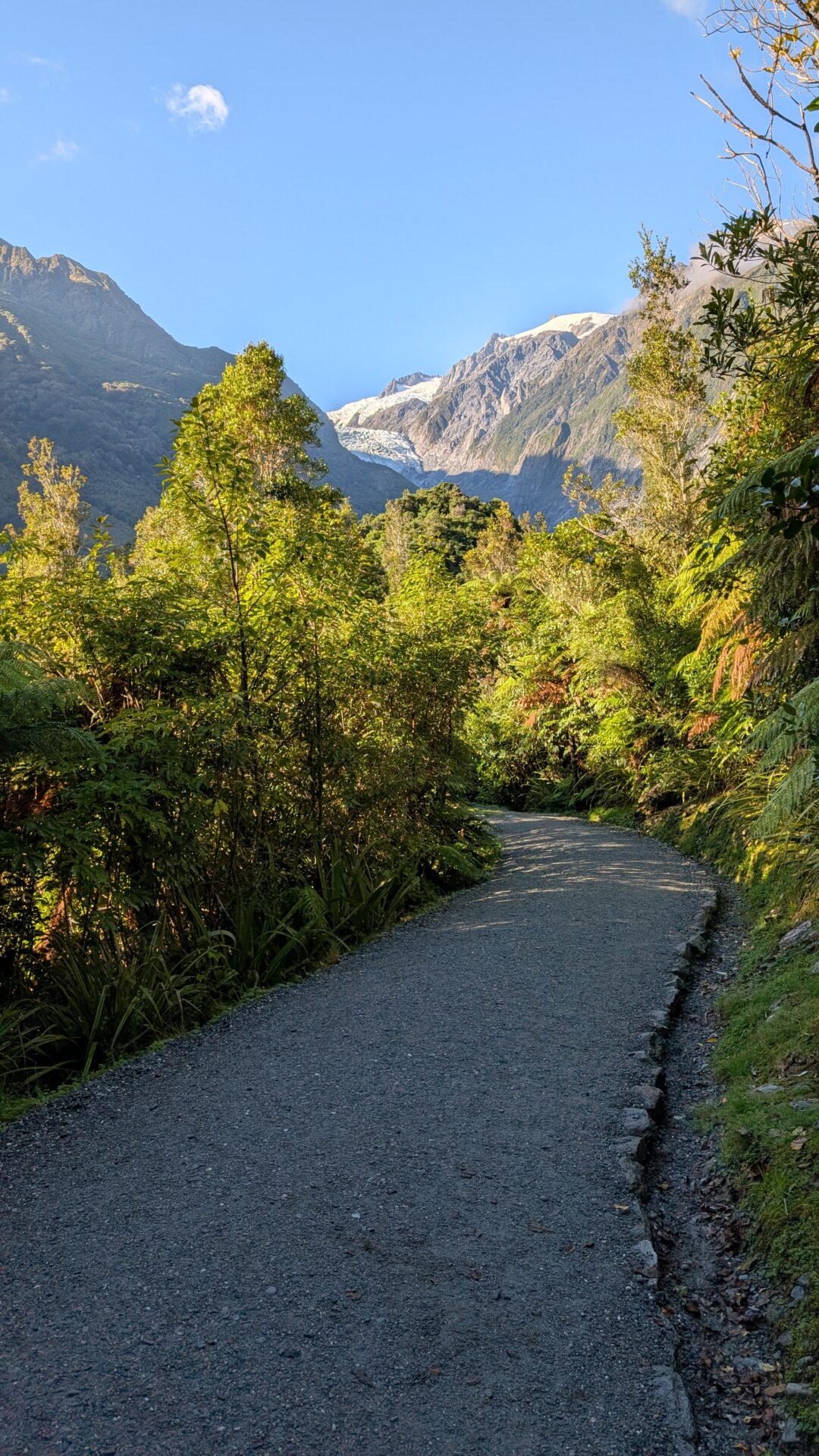
This is not a technical hike. There are no significant climbs, no scrambles, no moments where you’ll question your footwear choices — unless your footwear choices were genuinely inadvisable, in which case the wide gravel path will simply judge you quietly. The walk moves through the Waiho River valley, flanked by steep valley walls draped in rainforest, with the glacier visible at the head of the valley throughout. Multiple stopping points along the route offer different angles on the same extraordinary scene, and at least one of them — Peter’s Pool — will make you stop walking entirely and simply stare.
Trail Stages
Stage 1: The Car Park to the Valley Floor (The Anticipation Section)
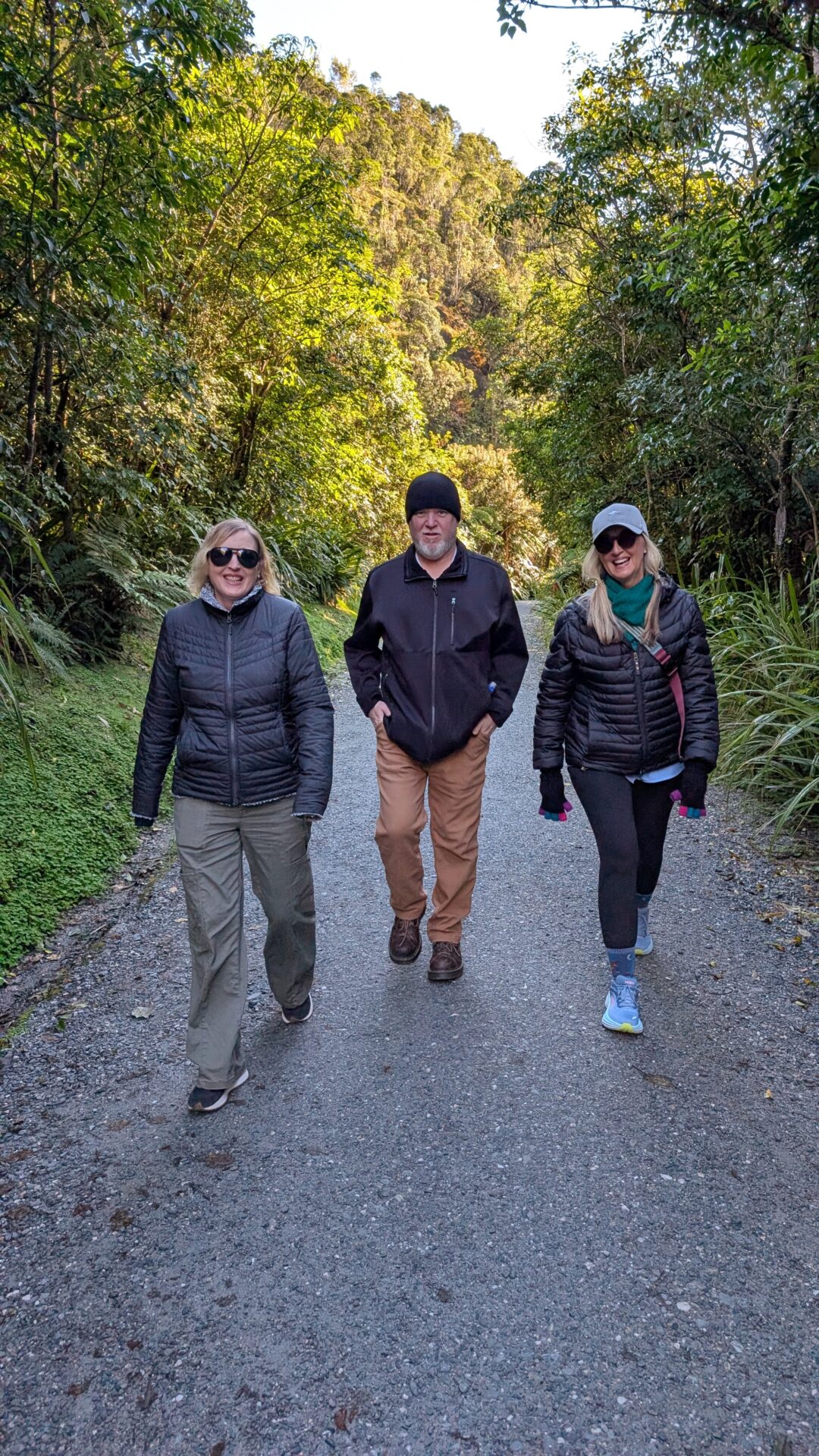
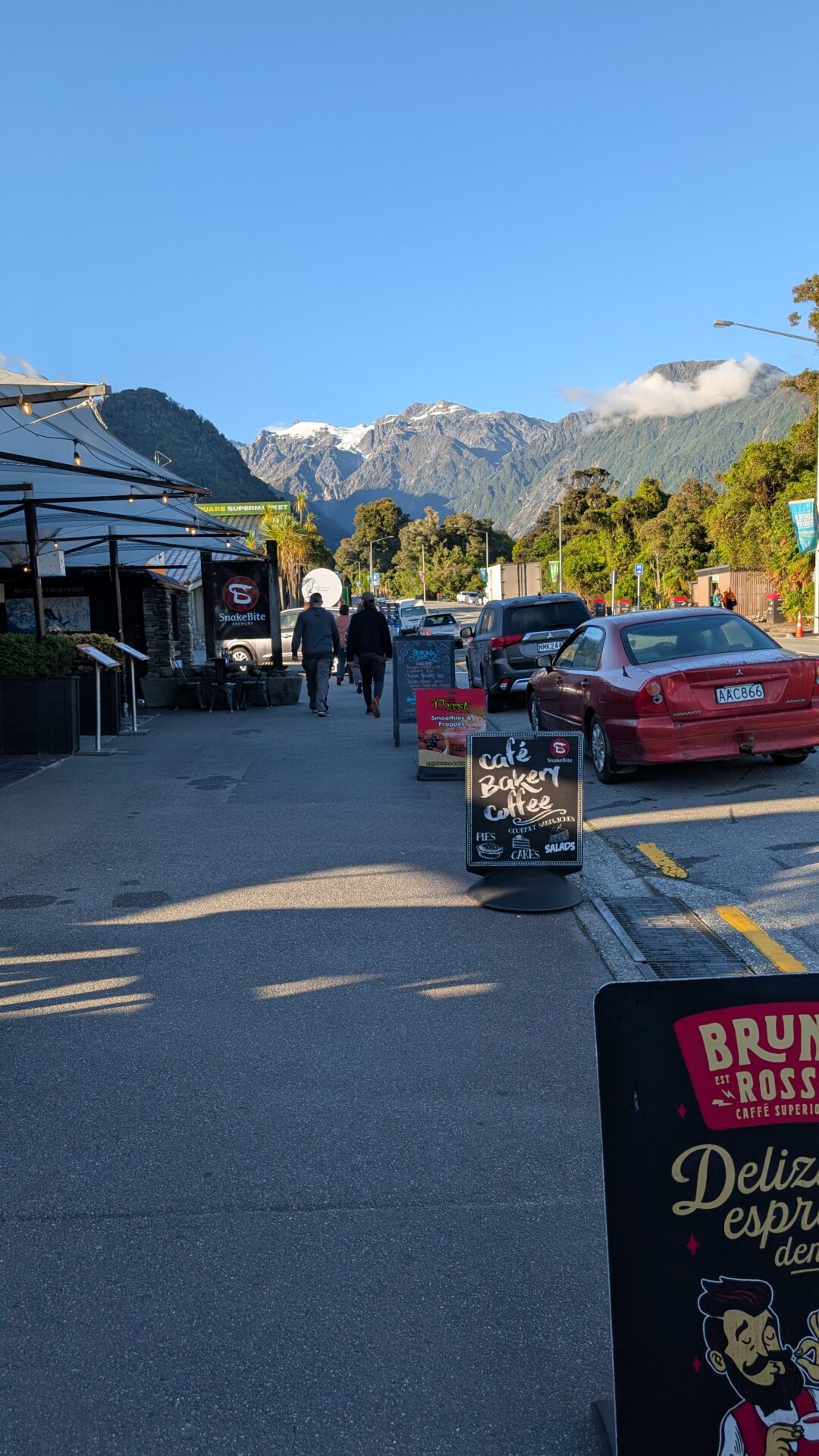
The walk begins from the main car park on Cron Street, just a few minutes from Franz Josef township, and enters the valley almost immediately. The transition from car park to landscape is abrupt in the best way: within a few hundred metres, the valley walls rise around you, the braided river appears to your left, and the scale of what you’ve walked into becomes apparent.
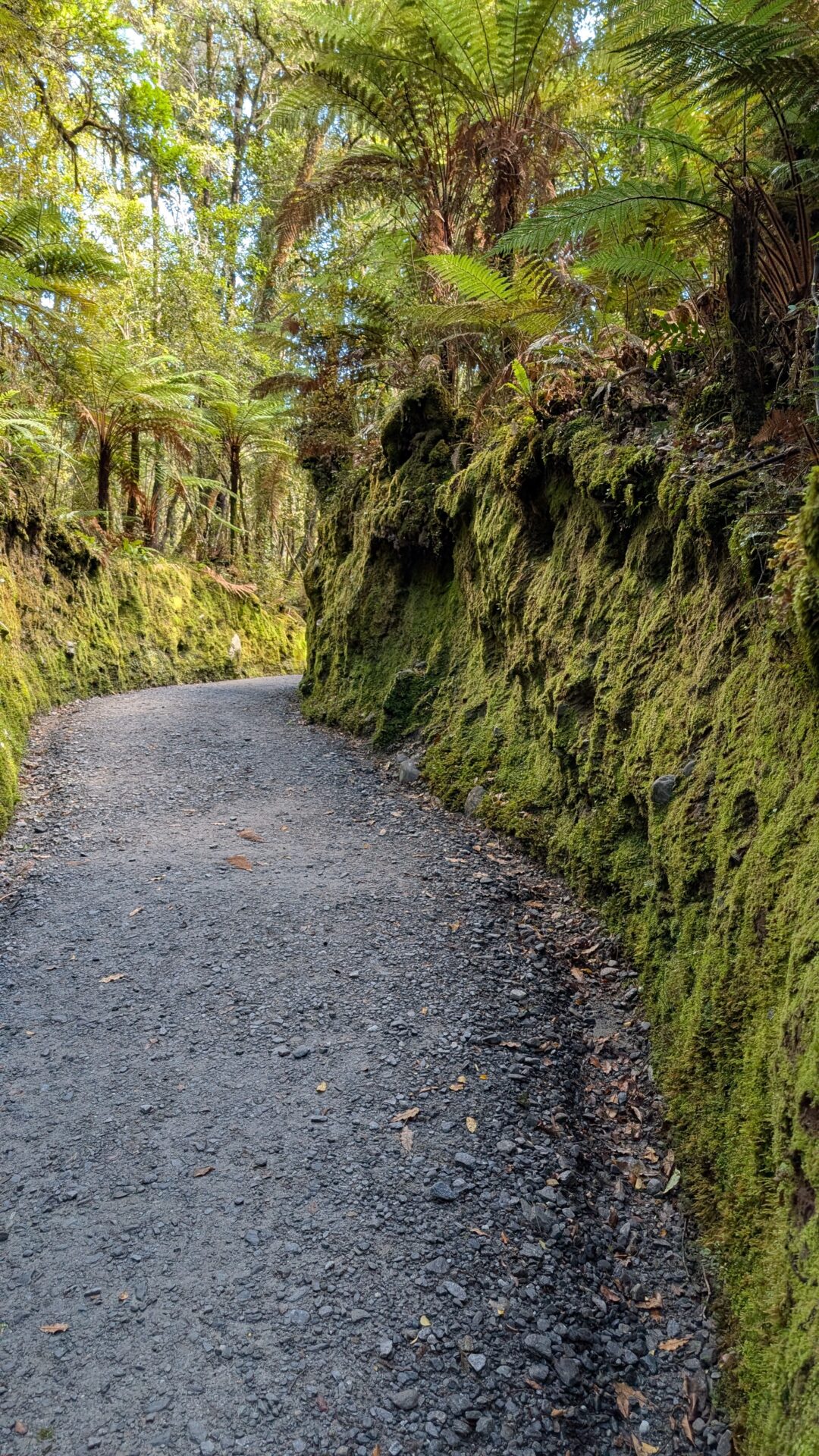
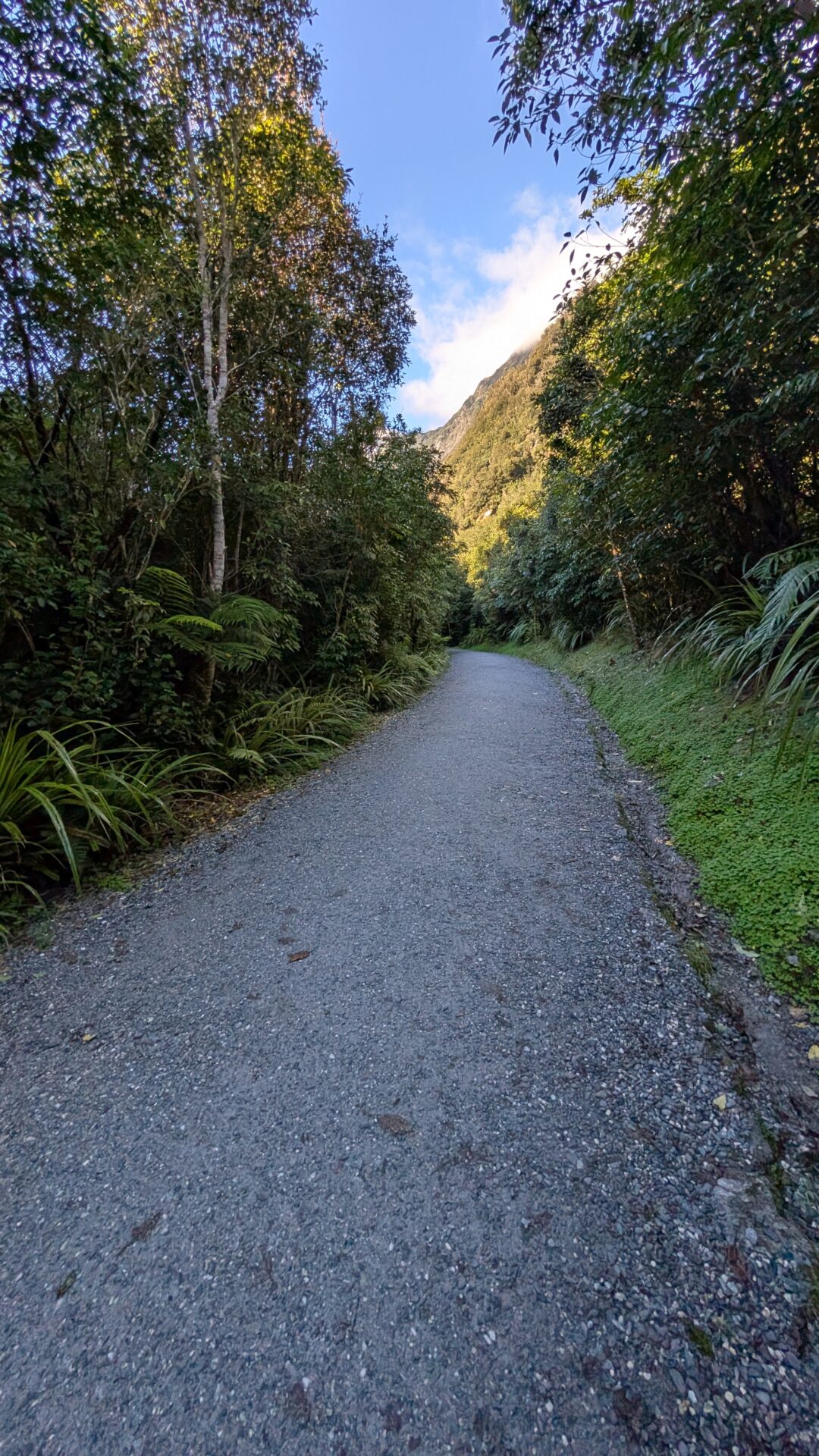
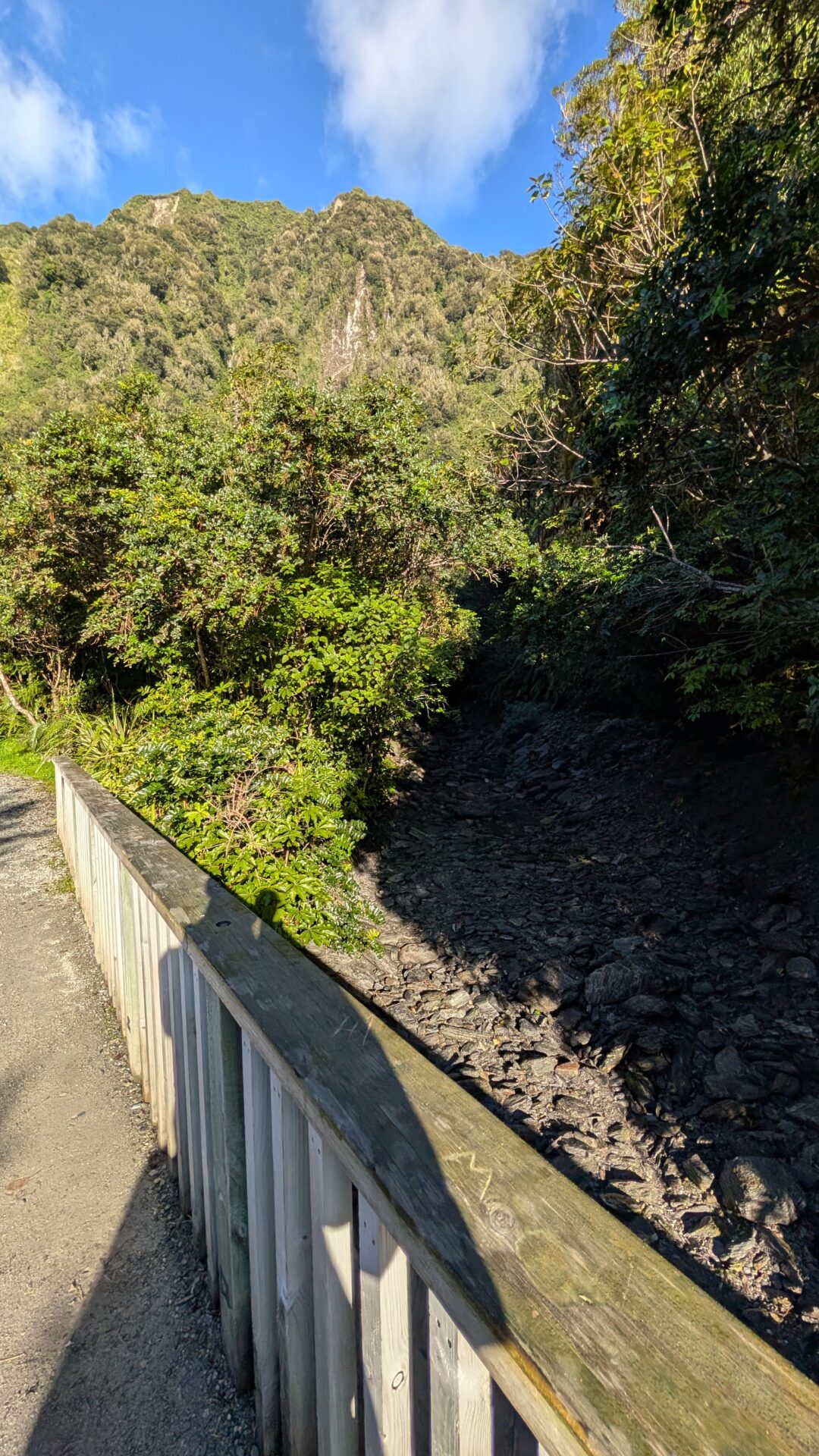
The path here is wide, well-maintained gravel — the kind of track that communicates clearly that DOC wants as many people as possible to have access to this experience, and has built the infrastructure accordingly. This is not wilderness hiking. It is, however, wilderness viewing, and the difference matters less than you’d think once the valley walls are above you and the glacier is at the end of the corridor.
The surrounding rainforest is dense and surprisingly intact given the volume of visitors this valley receives. Kahikatea, rimu, and kāmahi close in on either side of the path, and the sound of the Waiho River — fed by glacial melt, cold and grey-green with suspended rock flour — runs as a constant background.
Stage 2: Peter’s Pool (Stop Everything)
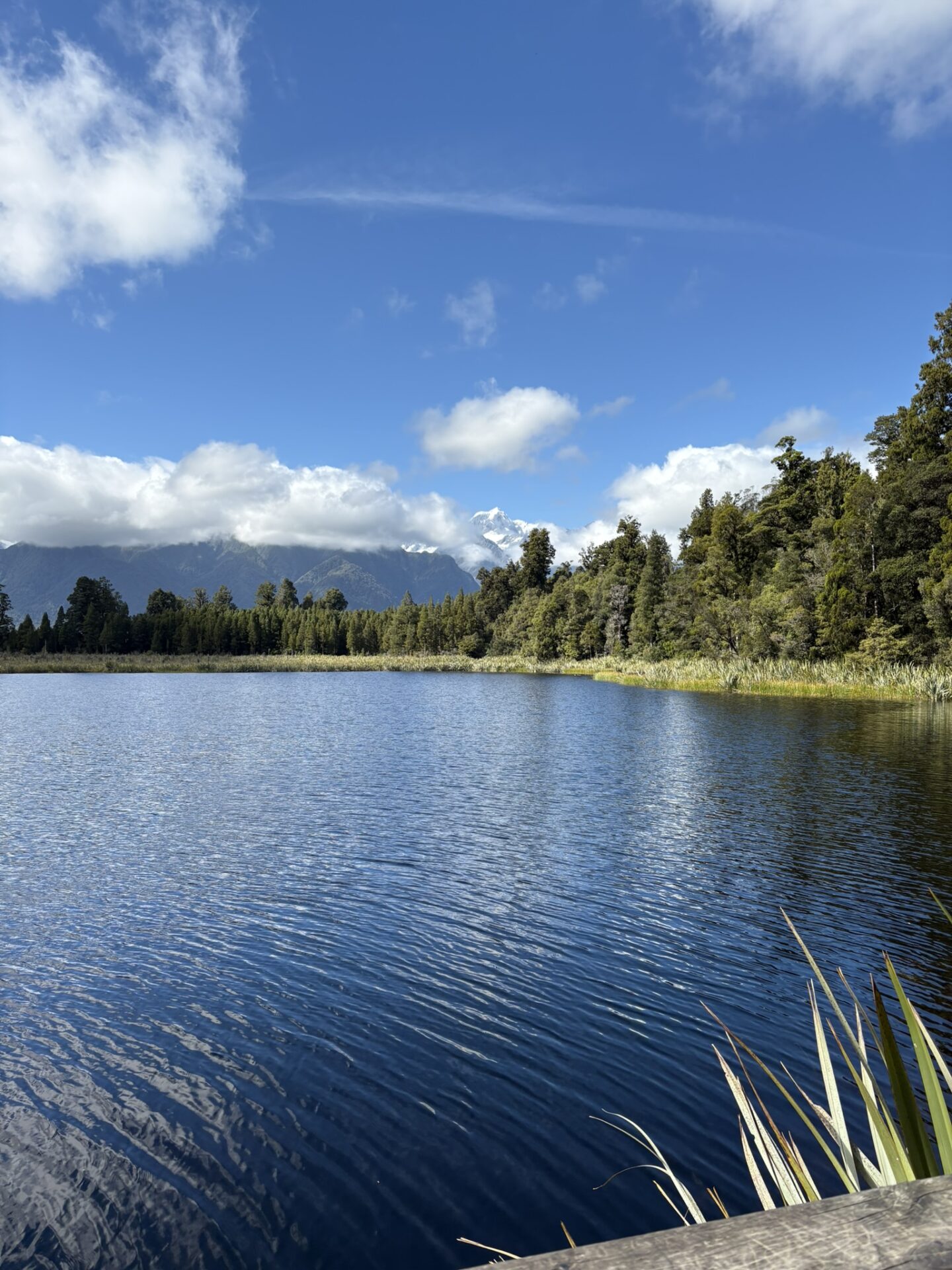
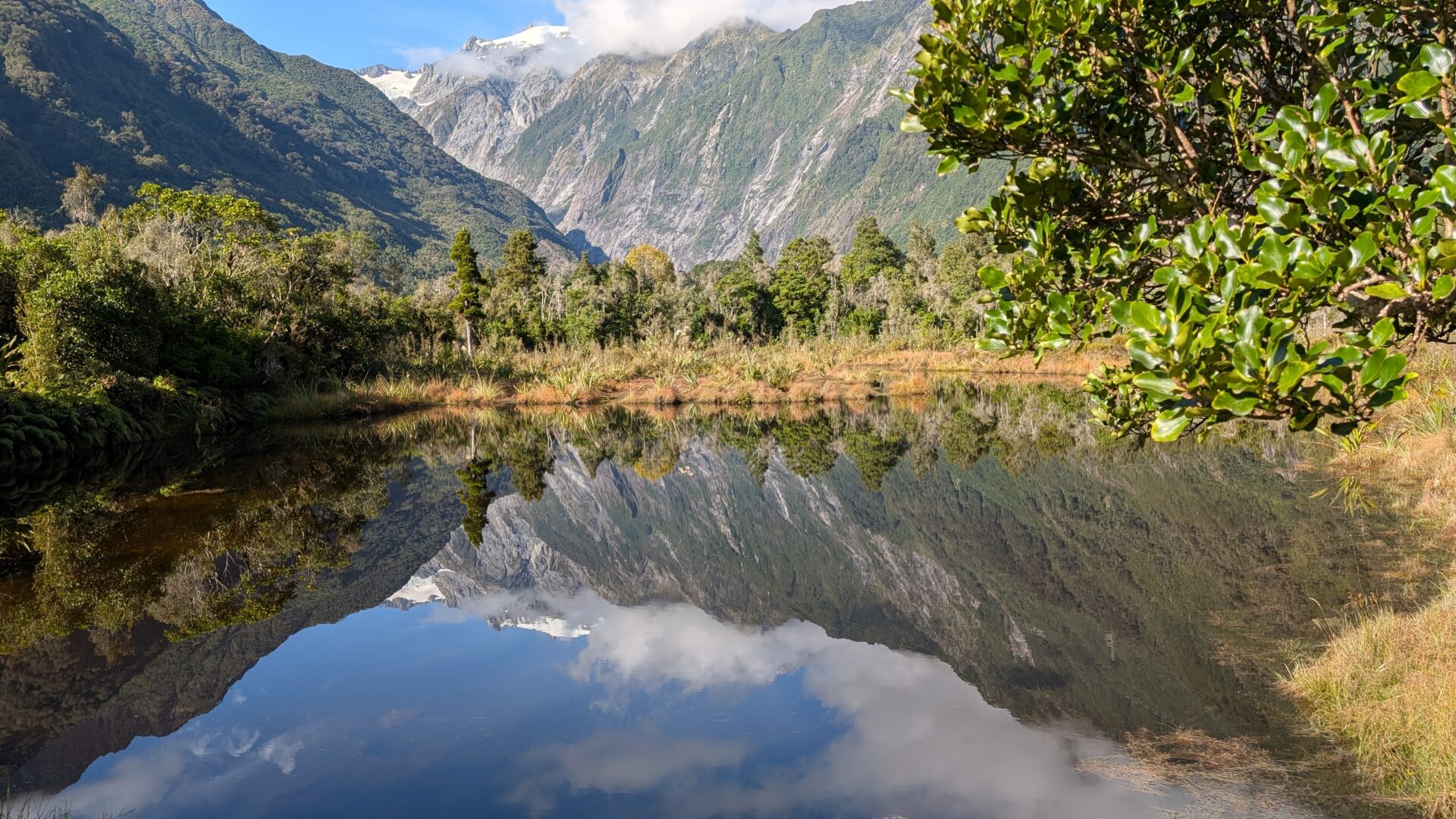
Before the main lookout, the trail passes Peter’s Pool: a small, still tarn set back slightly from the main path, with the glacier valley framed perfectly in its surface. On a calm morning — and this valley can be remarkably still before the wind picks up — the reflection is close to perfect. The glacier tongue, the valley walls, the cloud above the peaks, the blue sky: all of it inverted in dark, glassy water with grass at the margins and mountains rising on three sides.
[Featured photo: Peter’s Pool — the Franz Josef glacier valley reflected in a still tarn, cloud and mountain mirrored perfectly in the water. Taken on this walk.]
This is the photograph. Not the lookout shot — though that’s spectacular too — but this one, from the pool’s edge, with the reflection holding the whole valley in miniature. The light here changes quickly; early morning gives the softest, most even illumination, and the pool is calmest before the daily valley wind develops. If you arrive and the surface is rippled, wait five minutes. Patience is occasionally rewarded with extraordinary things.
There are multiple small reflection pools and still sections of water along this stretch of the valley, each offering a slightly different angle on the glacier and the surrounding peaks. The valley’s braided river system creates and destroys these pools seasonally — what’s there on your visit may not be there on the next — which gives each visit its own specific version of the walk.
Stage 3: The Main Lookout (The Full Picture)
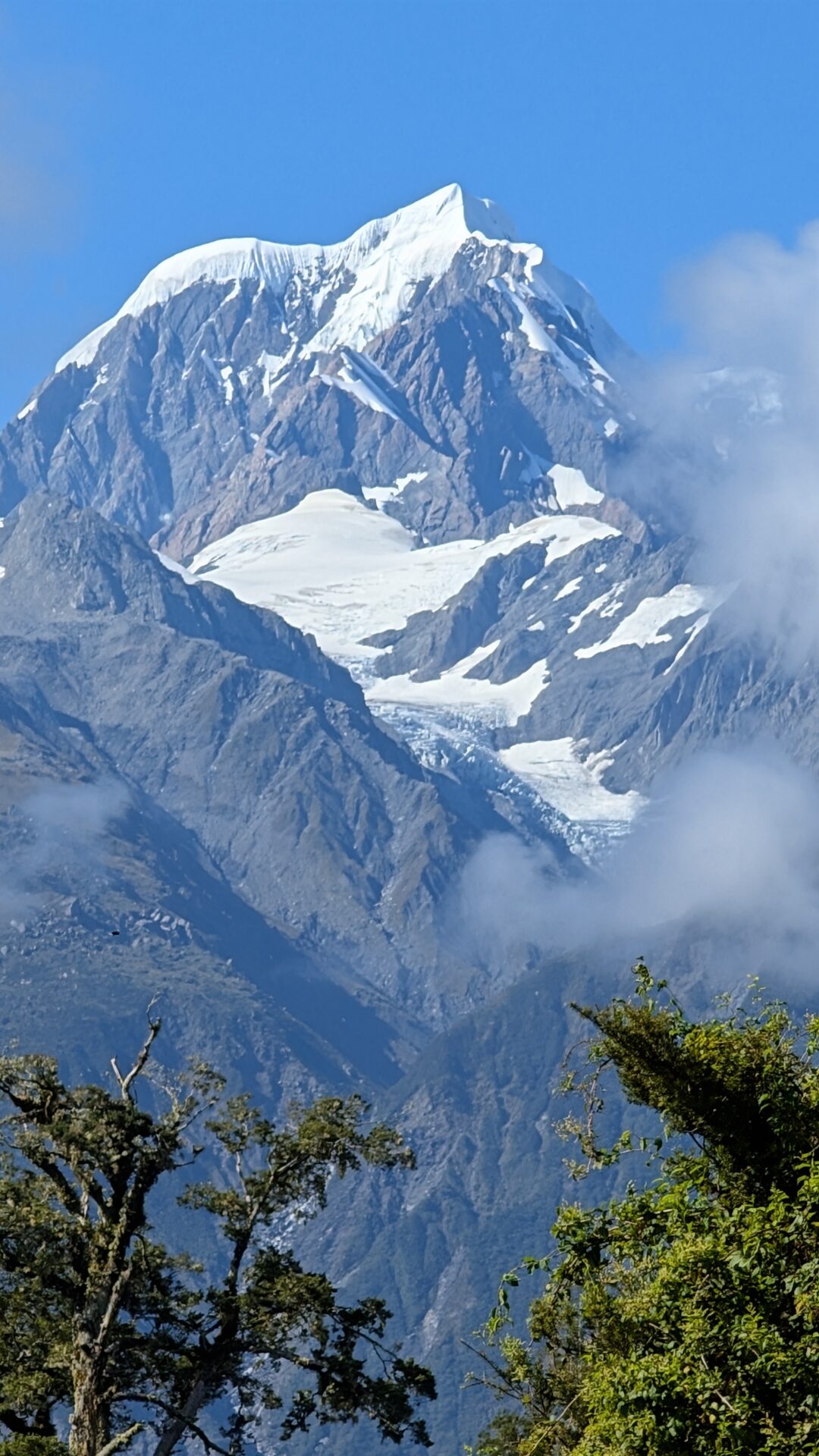
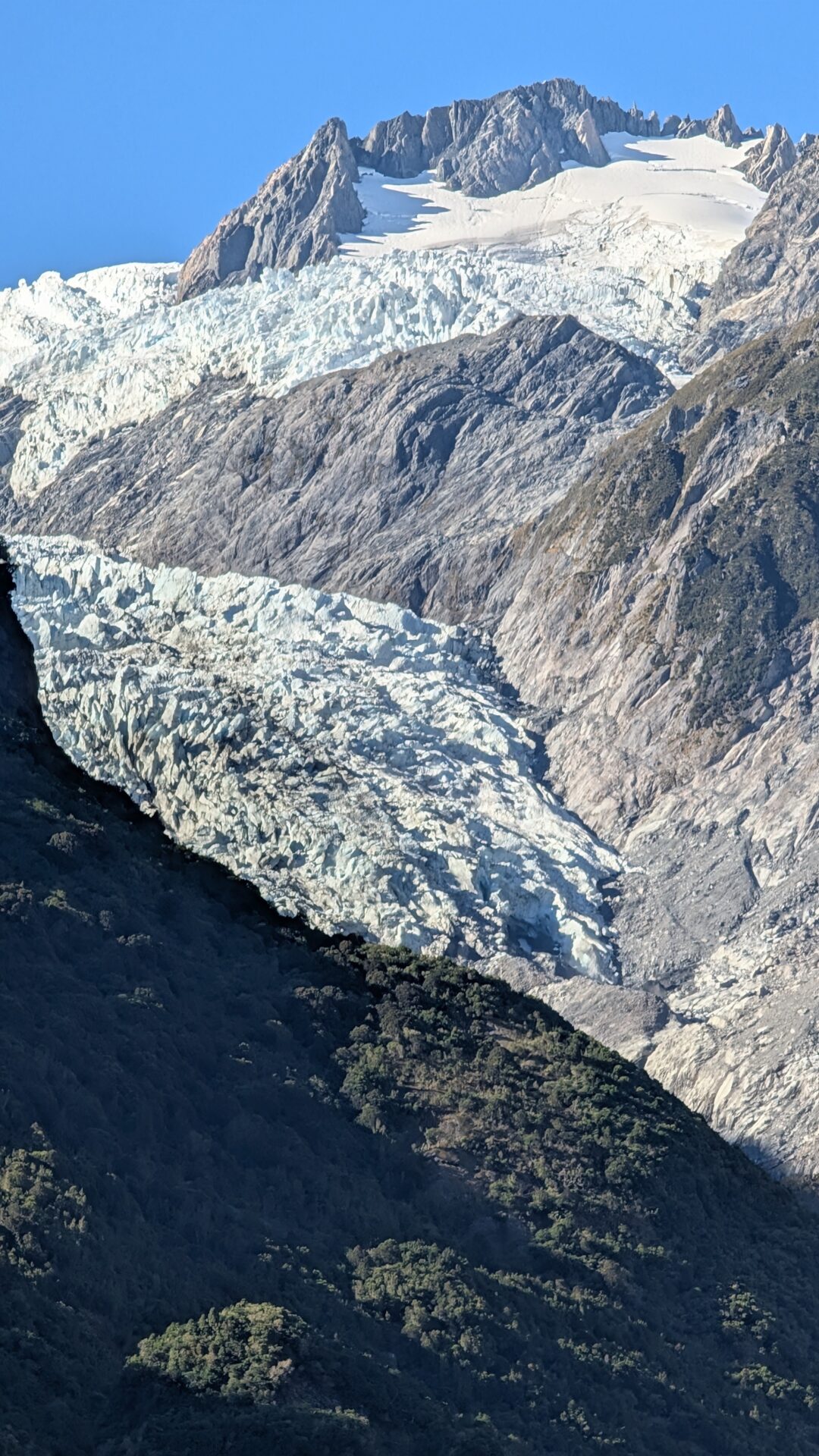
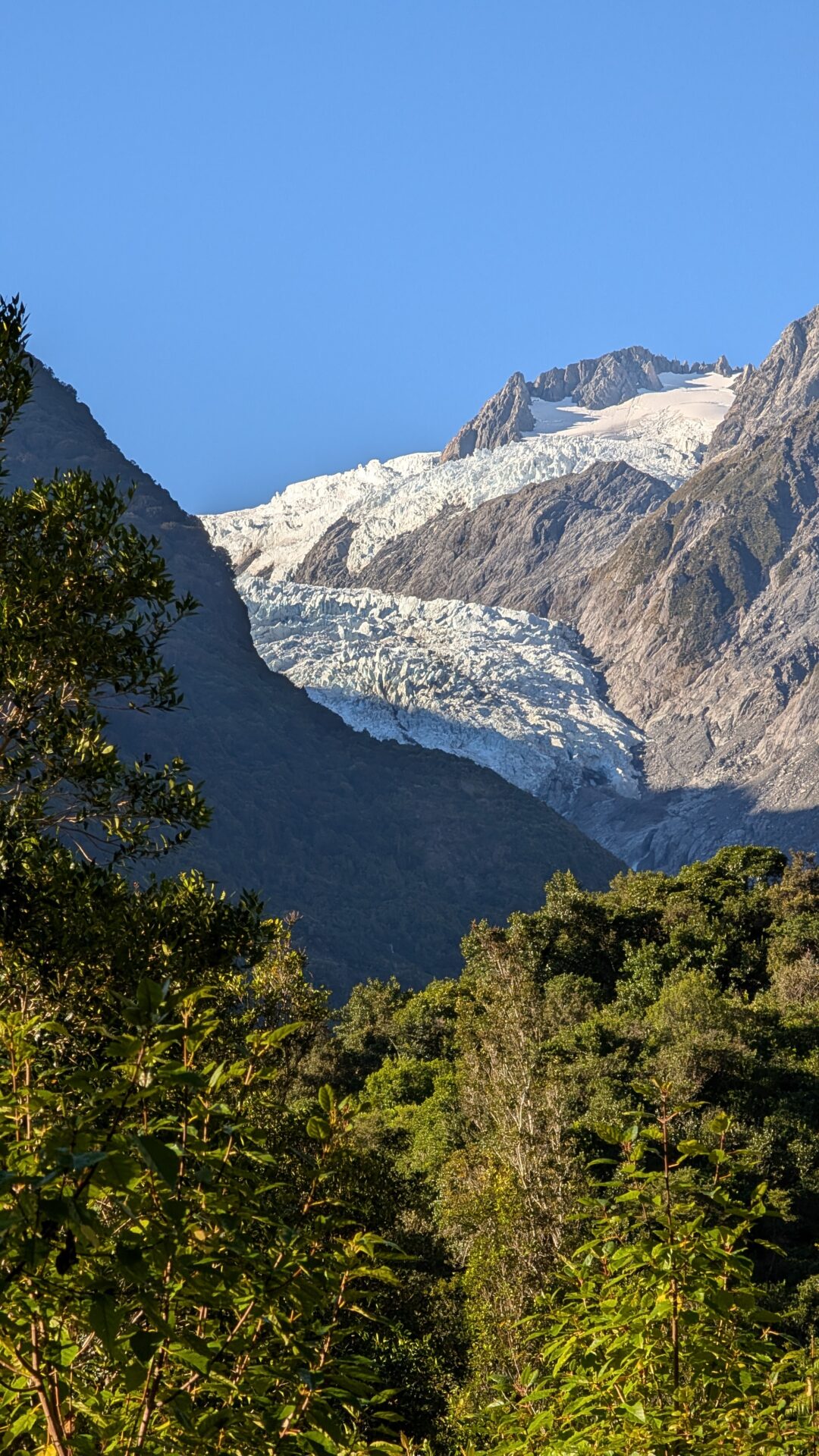
The main valley lookout sits at the end of the accessible section of the trail, at a point where the path can go no further without entering a restricted zone. From here, the view up the valley to the glacier terminus is unobstructed: the braided Waiho River in the foreground, the dense valley forest on either side, and the glacier itself — white and blue-grey, ancient ice visible from a significant distance — sitting high in its cirque above where it sat a decade ago, and considerably above where it sat a century ago.
[Featured photo: Franz Josef Glacier lookout — the glacier visible at the valley head above the braided Waiho River, with the interpretive sign in the foreground. This is what the walk delivers.]
The interpretive panels here are worth reading slowly. They’re clear, they’re honest, and they put the glacier’s current position in the context of its historical extent — marked stones and posts along the valley show previous terminus positions, a physical record of retreat that is considerably more affecting than any graph. The panel in the foreground of the lookout photograph says it plainly: future generations will likely have to walk farther up this valley to see what you’re seeing right now.
That’s the view. And that’s the context. Both deserve your full attention.
The Climate Dimension (The Part the Trail Doesn’t Let You Ignore)
Franz Josef is one of the world’s few glaciers that descends into temperate rainforest — a genuinely rare geological circumstance produced by the extraordinary precipitation of the West Coast and the altitude of the Southern Alps. At its maximum extent, the glacier reached nearly to the coast. It has retreated many kilometres since then, and the rate of retreat has accelerated significantly in recent decades.
The valley walk makes this legible in a way that statistics don’t. The marker posts showing previous terminus positions are spaced along the valley floor. The interpretive signage is matter-of-fact rather than alarmist. The view itself — glacier visible but distant, the valley floor it once filled now river and forest — communicates the scale of change more effectively than any briefing.
None of this should stop you going. It should, perhaps, clarify why going matters and why going now, rather than later, is the right call.
What to Pack
For an easy, flat, 2.5km return walk from a car park with full facilities, the packing list is mercifully short. But a few things earn their place:
- Sandfly repellent — the West Coast is universal sandfly territory. Apply at the car park. Not at the first bite. At the car park.
- Layers — the valley creates its own microclimate. Mornings can be cool and still; afternoons often bring a valley wind that changes the character of the walk entirely. A light jacket takes 30 seconds to put on.
- Camera — obvious, but worth specifying: bring the best camera available to you. The reflection at Peter’s Pool and the lookout view both reward quality optics. A polarising filter helps significantly with the pool reflection.
- Water — it’s a short walk, but the West Coast sun is real and the valley can be warm by midday.
- Good walking shoes — the path is wide and well-formed, but the valley floor has some uneven sections. Nothing technical; just not sandals.
When to Go
Time of day: Morning, emphatically. The pool reflections require calm water, which means no valley wind, which means early. The glacier is also lit from the east in morning light, which is considerably more photogenic than the flat midday version. The car park is quieter before 9am. All of these things point in the same direction.
Season:
Summer (December–February): Long days and the highest visitor numbers of the year. The car park fills early. The light is good but the crowds are real. Arrive before 8am for the best of both the conditions and the solitude.
Autumn (March–May): Thinner crowds, softer light, and the surrounding forest in its most varied colour. Some of the best photography conditions of the year if you catch a clear morning.
Winter (June–August): Snow on the peaks, cold valley mornings, dramatically reduced visitor numbers. The glacier looks its most dramatic against clear winter sky. Shorter days mean the morning window is narrower. The pool reflections on a still winter morning are extraordinary.
Spring (September–November): Variable weather and vivid green from the winter rain. The glacier meltwater is higher in spring, which affects the valley floor pools. Dress for the full range of West Coast conditions.
Common Mistakes to Avoid
- Arriving midday in summer. The car park is full, the valley wind has developed, the pool surfaces are rippled, and you’re sharing the lookout with a significant portion of the tourist trail. Go in the morning.
- Skipping Peter’s Pool. It’s slightly off the main path and easy to walk past if you’re focused on the lookout. Don’t. The reflection is the photograph.
- Ignoring the interpretive signs. They’re there for a reason. Read them. They reframe the view in a way that makes it more meaningful, not less.
- Forgetting the sandflies. This appears in every West Coast section of this blog series and will continue to do so until people take it seriously.
- Expecting to get close to the glacier. The terminus is not accessible from the valley walk — guided glacier experiences (heli-hike or ice climbing) are available separately for those who want to be on the ice. The valley walk delivers the view, not the glacier surface.
- Going on a bad-weather day without checking DOC conditions. The valley can close after heavy rain. Check before you drive out.
FAQs
Can I walk to the Franz Josef Glacier itself? Not on the standard valley walk — the glacier terminus is not accessible on foot from the public trail. The walk delivers outstanding views of the glacier from the valley lookout. To get on the ice, guided heli-hike experiences operate from Franz Josef township and are worth every cent if conditions allow.
How long does the Franz Josef valley walk take? Allow 1.5 to 2 hours return for a comfortable pace with time at the reflection pools and the lookout. It can be done faster, but rushing it is missing the point.
Is the Franz Josef Glacier walk suitable for children and less mobile visitors? The main valley track is wide, well-formed, and largely flat — one of the more accessible glacier experiences available anywhere. Suitable for most fitness levels and reasonable footwear. Pushchairs are manageable on the main path.
Is the trail open year round? Generally yes, but the valley floor can flood after heavy rain and sections close temporarily. Always check the DOC website or the Franz Josef visitor centre for current conditions before visiting.
What’s the parking situation? Pay and display at the main Cron Street car park, which fills quickly in peak season. There are additional overflow options in the township. Arriving before 9am in summer solves most parking problems.
Is the glacier still visible from the lookout? Yes — the glacier terminus is visible from the lookout, though its position continues to change as retreat continues. The valley interpretive markers show its historical positions. What’s visible today is significantly less than what was visible twenty years ago, and considerably more than what may be visible in twenty years’ time.
Conclusion: Go While It Looks Like This
The Franz Josef Glacier walk is, logistically, one of the easiest things on the New Zealand tourist trail. Wide path, flat ground, free parking, 90 minutes return, no gear required beyond reasonable footwear and sandfly repellent. It asks almost nothing of you physically. What it asks of you emotionally is a different matter.
Because the interpretive sign at the lookout is right. The glacier is retreating. The valley is slowly reclaiming the ice. Future visits will look different from this one, and visits after those will look different again. The marker posts along the valley floor are not abstract data points — they are places where ice stood, where you can now walk, in a valley that is beautiful and diminishing simultaneously.
The mirror reflection at Peter’s Pool, on a still morning with the peaks doubled in perfect dark water, is one of the more quietly overwhelming things you can stand in front of in this country. Not because it’s dramatic — it’s actually very still, very quiet, very calm — but because it shows you the valley whole, contained, exactly as it is right now.
Go. Take the photograph. Read the signs. Stand at the lookout for longer than you planned.
This is what it looks like today.
No AllTrails data recorded on this walk — some experiences resist being reduced to statistics. Conditions at time of visit: glorious. Reflection quality: exceptional. Sandfly management: adequate. Emotional response to interpretive signage: significant.